Count your oxygen
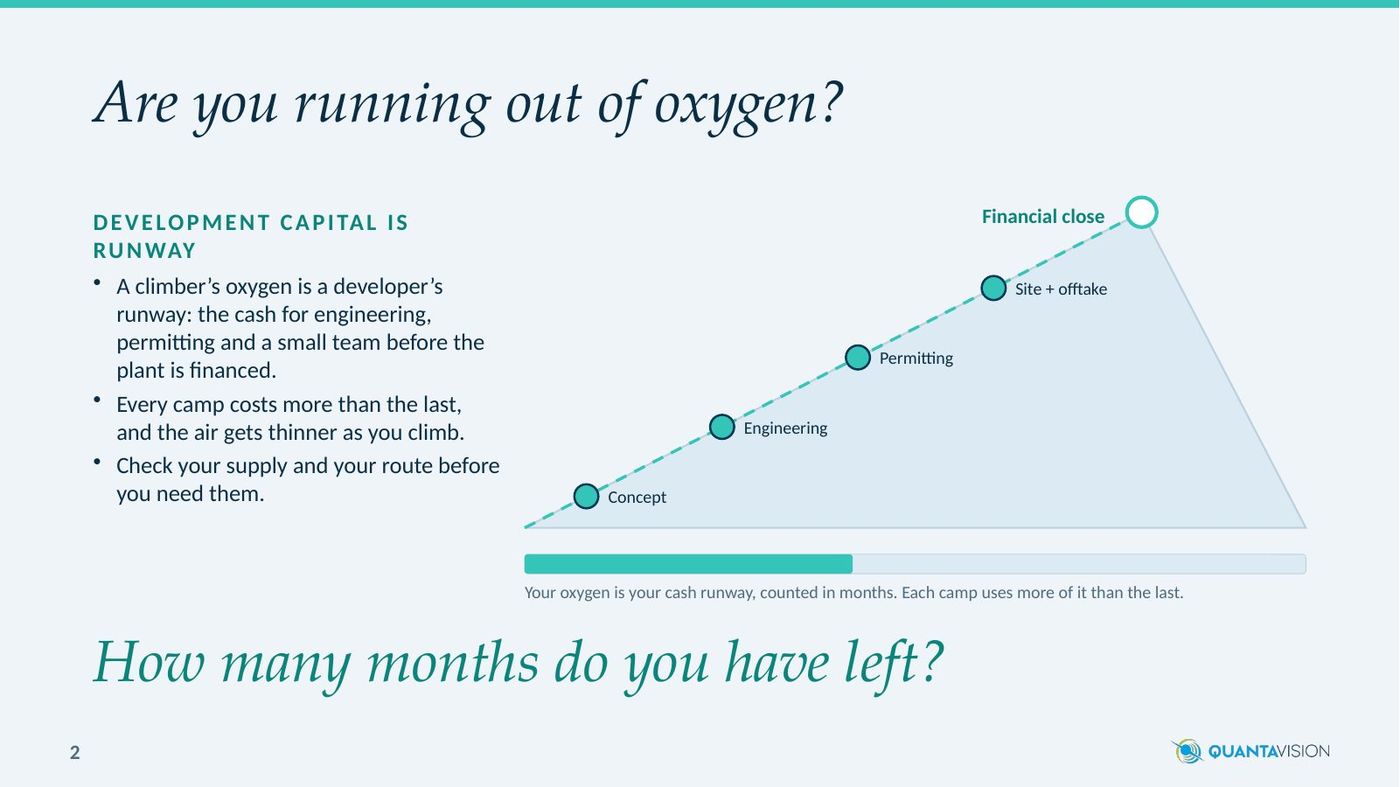
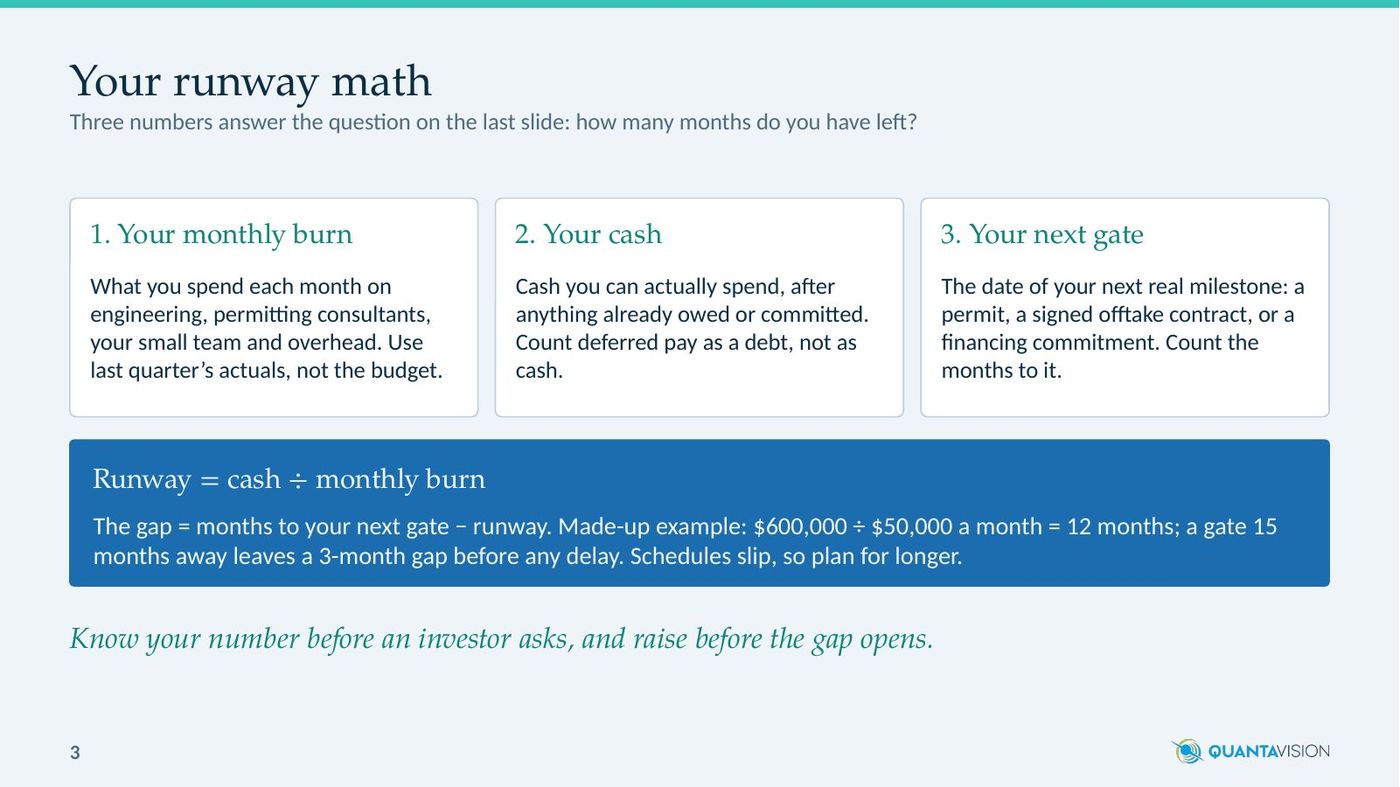
Development capital is your runway. Runway equals cash divided by monthly burn, and the gap is the months to your next gate minus that runway. Know your number before an investor asks, and raise before the gap opens.
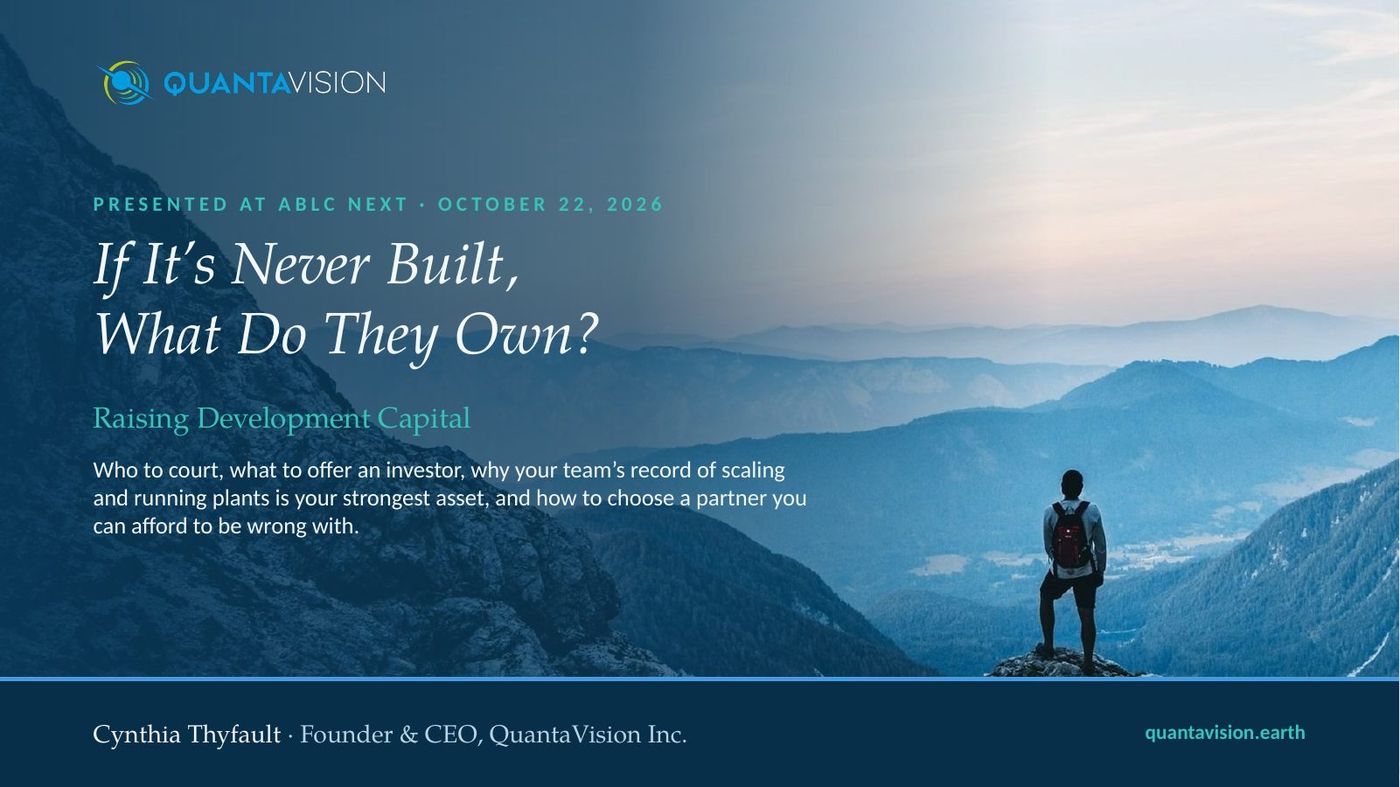
Presented at ABLC NEXT · October 22, 2026
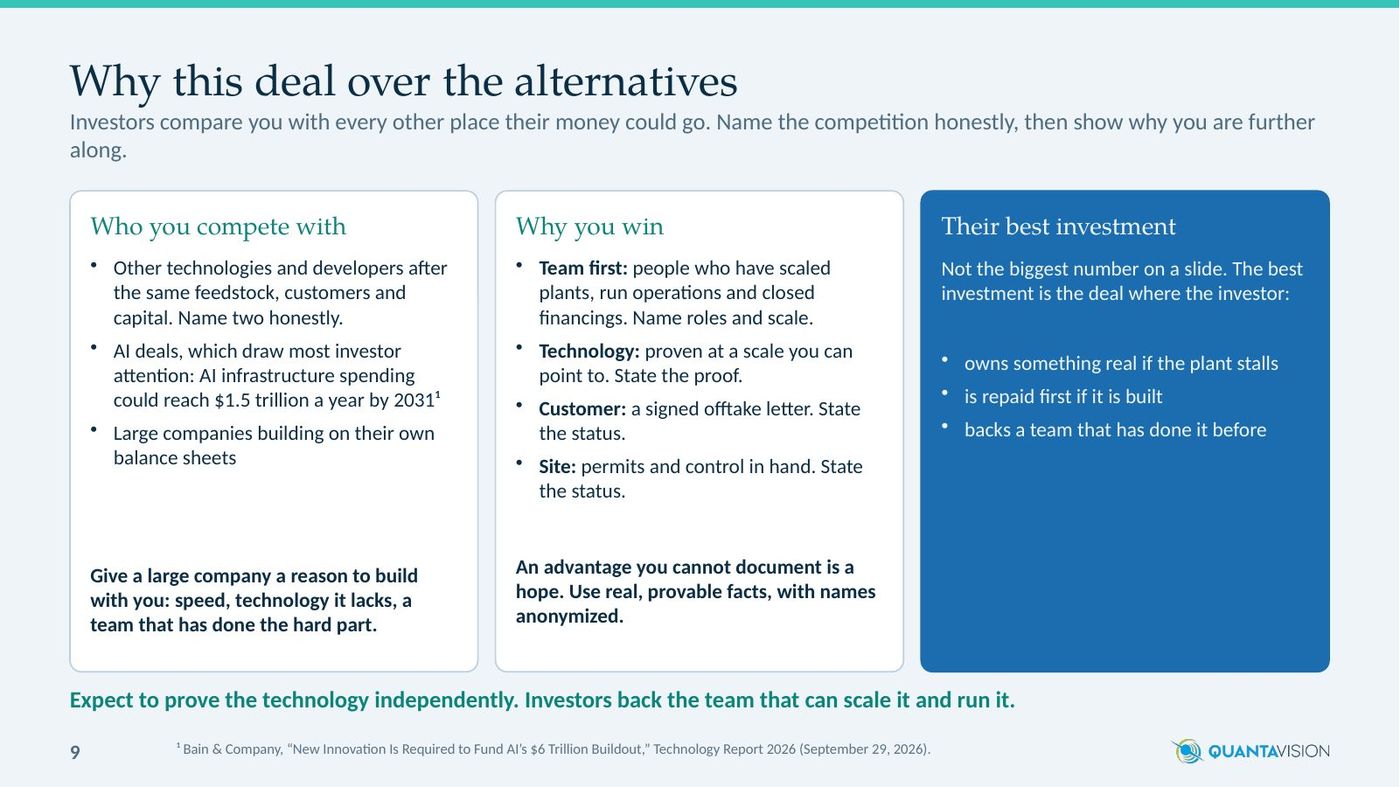
Raising development capital: who to court, what to offer an investor, why your team’s record of scaling and running plants is your strongest asset, and how to choose a partner you can afford to be wrong with.
If this plant never gets built, what does my investor still own?
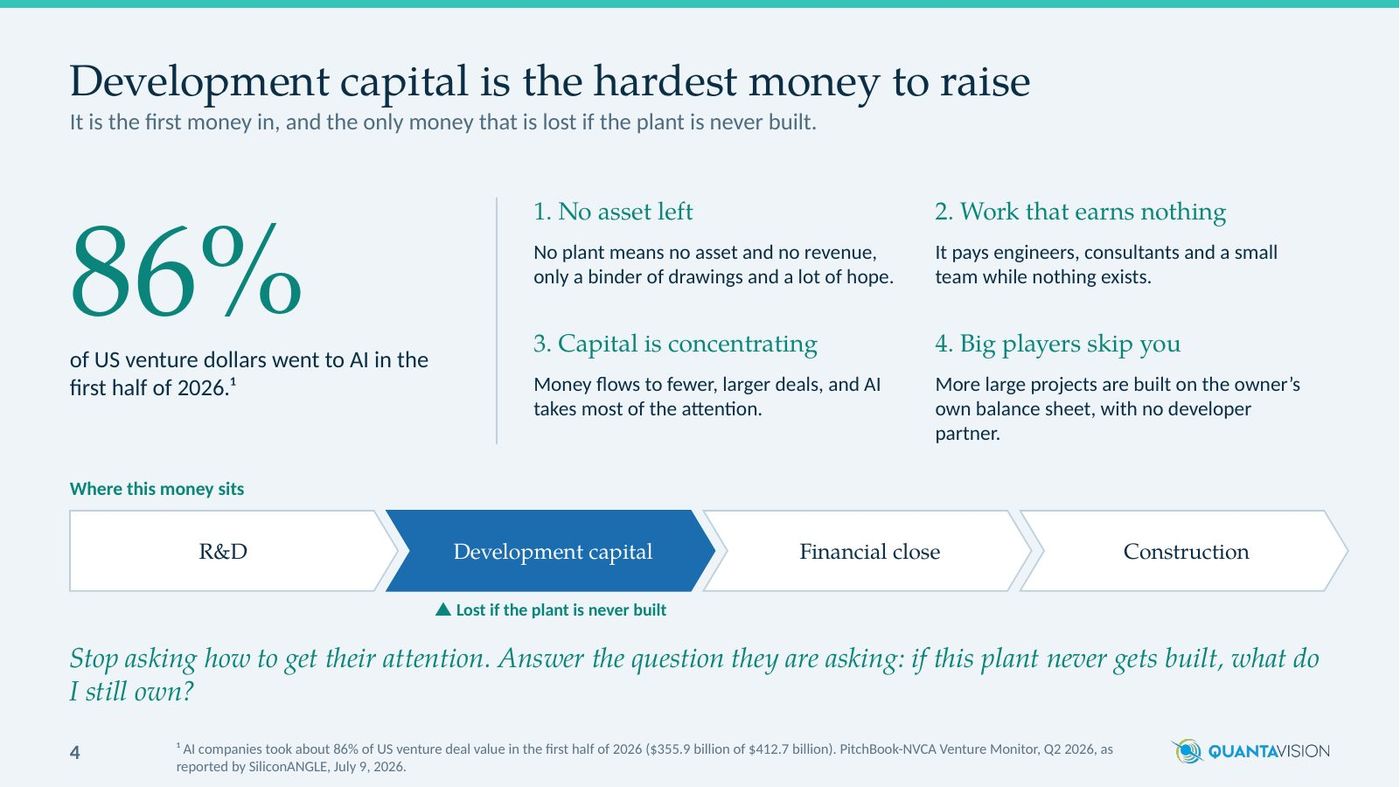
Development capital pays for engineering, permitting and a small team before a plant is financed. It is the first money in, and the only money that is lost if the plant is never built.
So stop asking how to get an investor’s attention. Answer the question they are asking. This deck is written to be read on its own, with no presenter in the room.
Use the arrows, the thumbnails, or your keyboard’s left and right keys. The full deck is also available as a PDF.
Take the deck with youDownload the full 14-slide PDF to read offline or share with your team.
Download the PDFDevelopment capital is your runway. Runway equals cash divided by monthly burn, and the gap is the months to your next gate minus that runway. Know your number before an investor asks, and raise before the gap opens.
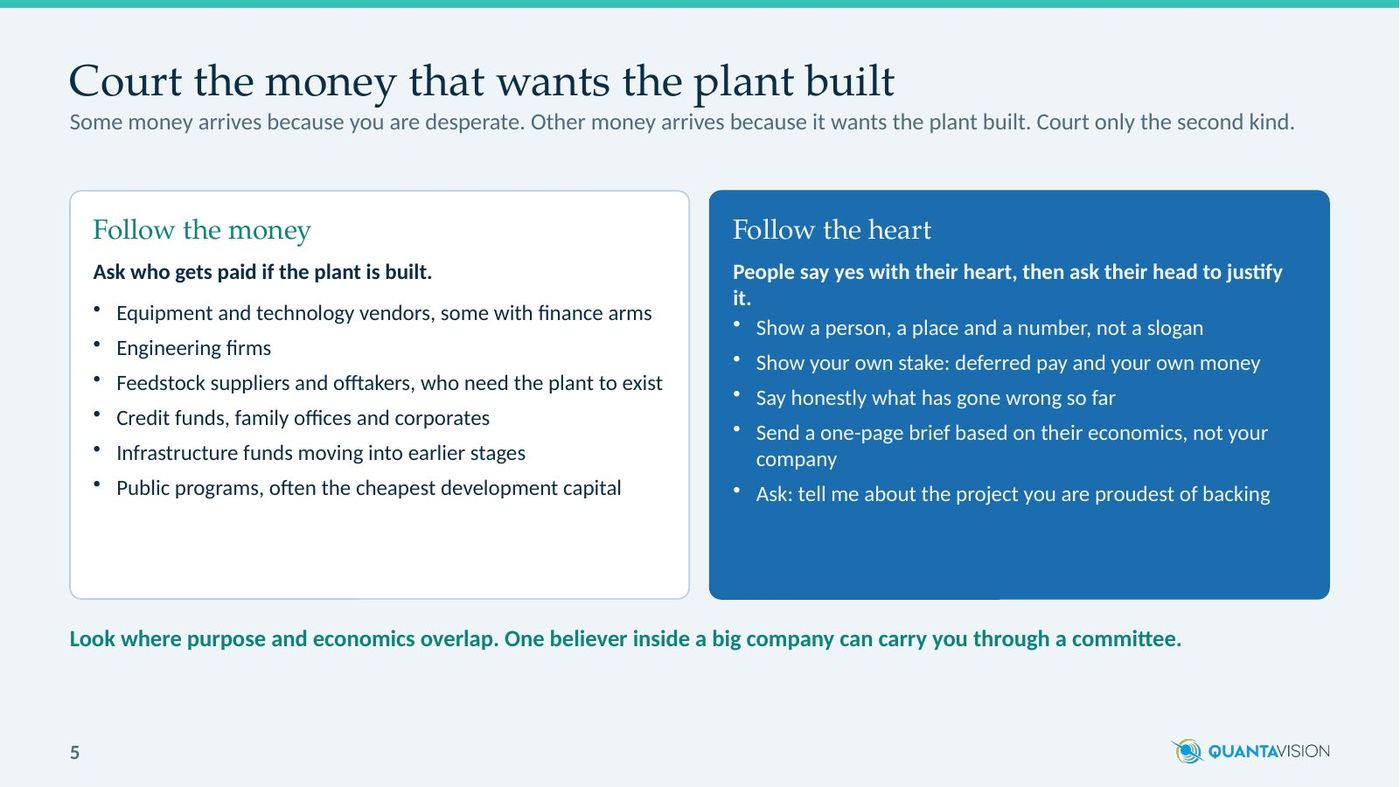
Some money arrives because you are desperate. Other money arrives because it wants the plant built. Ask who gets paid if the plant is built, then show a person, a place and a number, not a slogan.
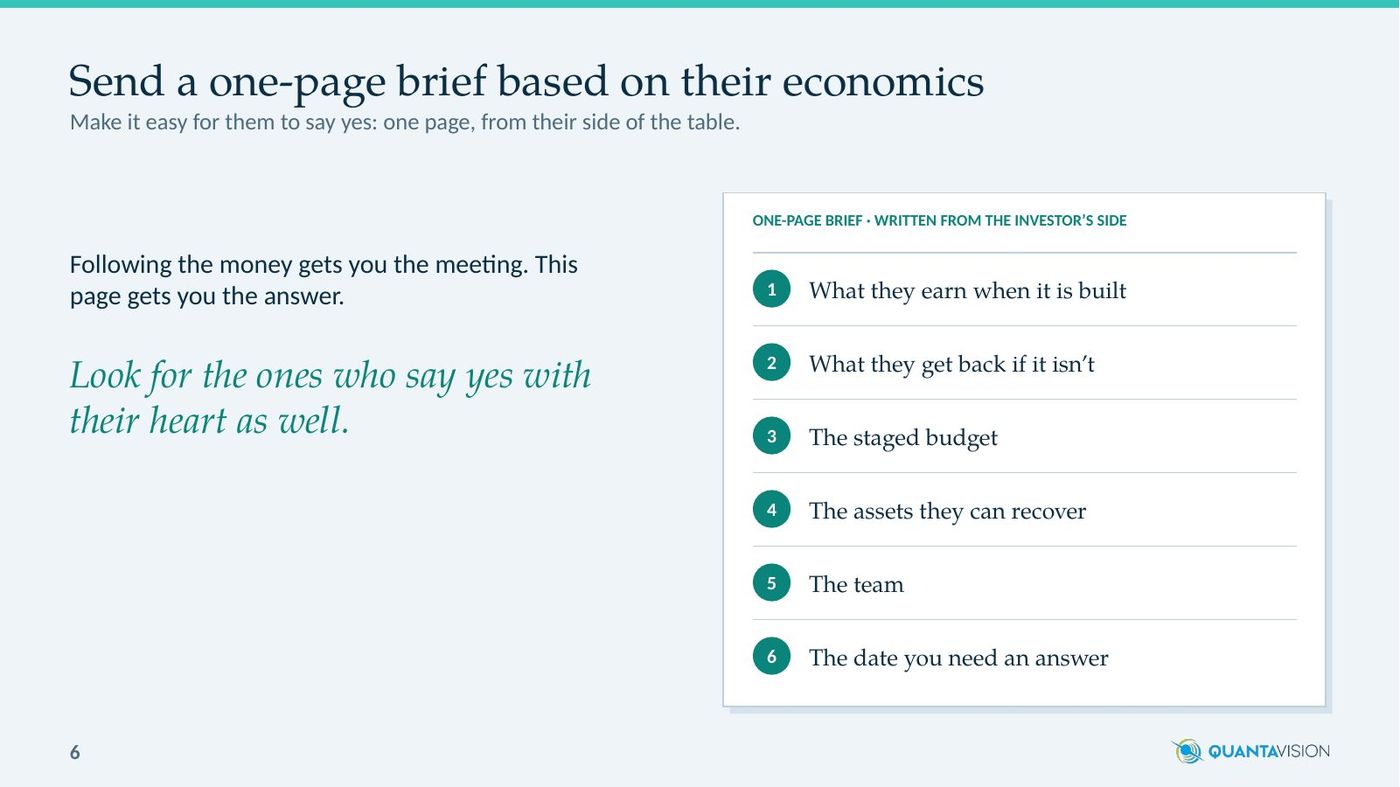
A one-page brief from the investor’s side of the table: what they earn when it is built, what they get back if it isn’t, the staged budget, the assets they can recover, the team, and the date you need an answer.
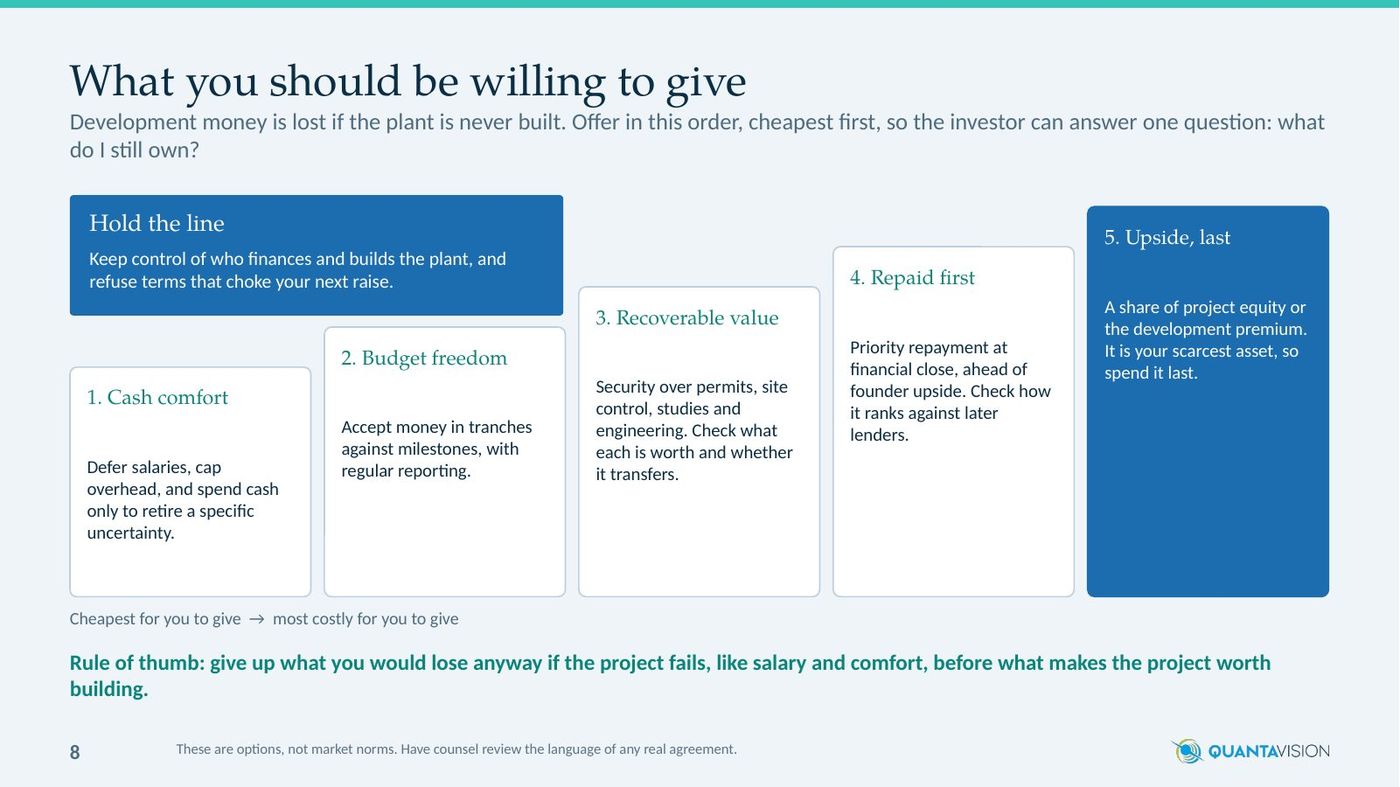
Cash comfort, budget freedom, recoverable value, being repaid first, and upside last. Give up what you would lose anyway if the project fails before what makes the project worth building.
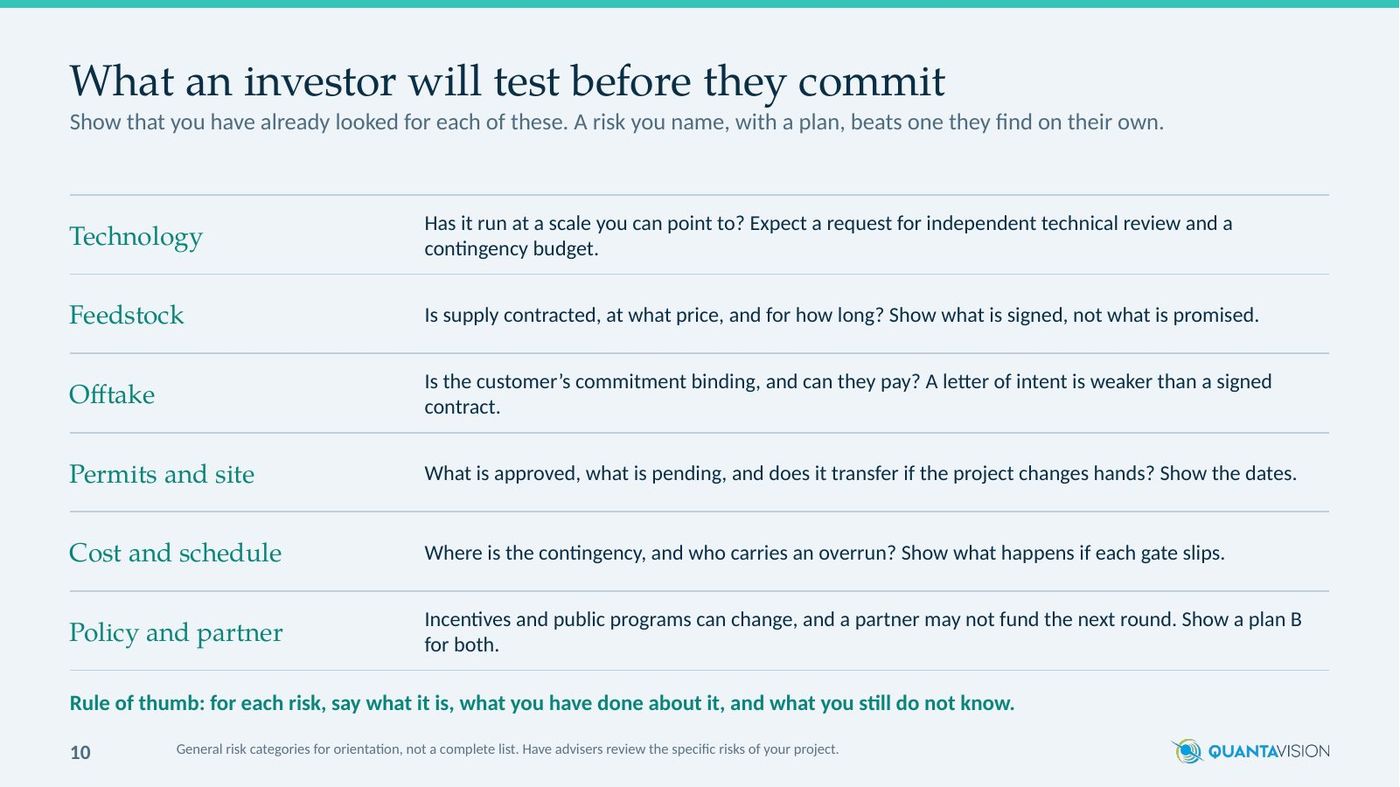
Technology, feedstock, offtake, permits and site, cost and schedule, policy and partner. For each risk, say what it is, what you have done about it, and what you still do not know.
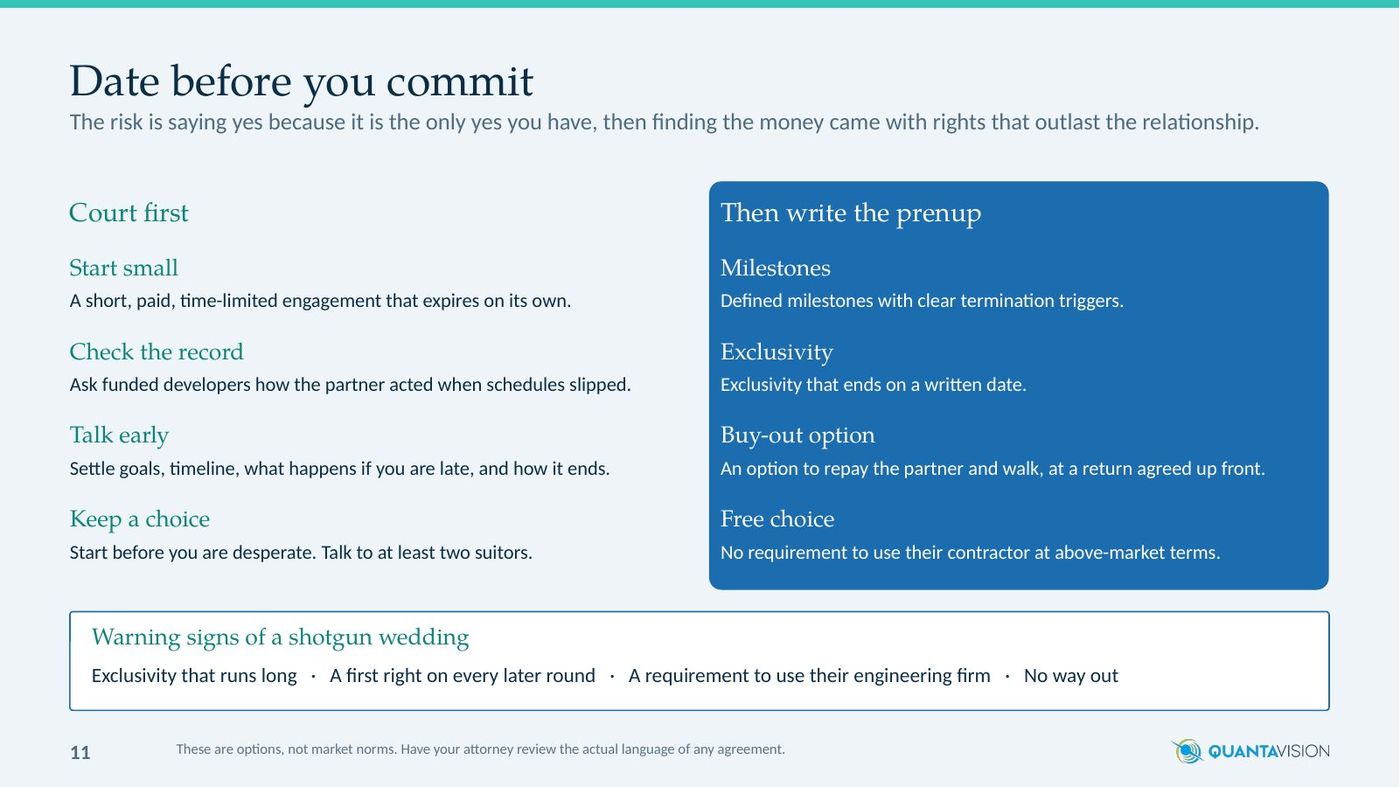
Start small, check the record, talk early and keep a choice. Then write the prenup: milestones, exclusivity that ends on a written date, a buy-out option and a free choice of contractor.
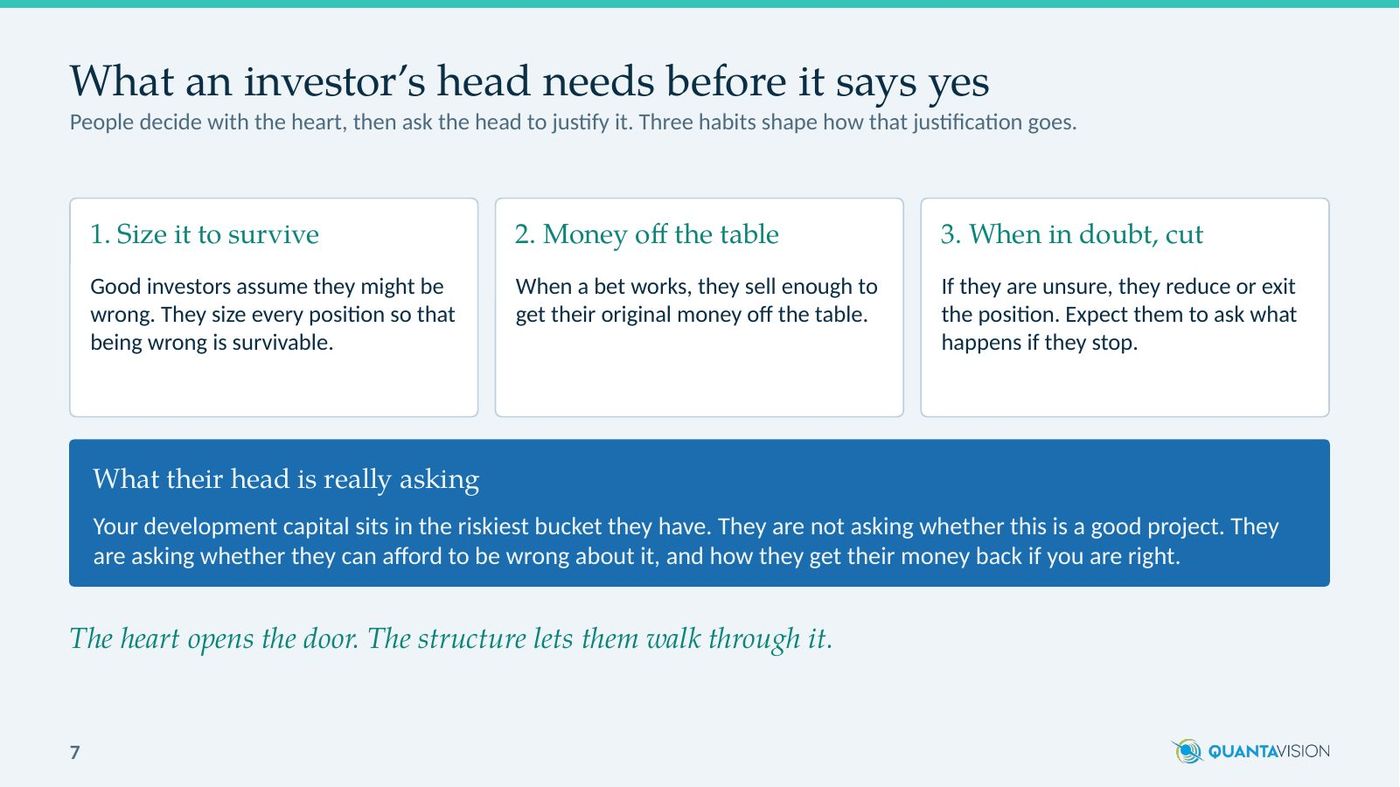
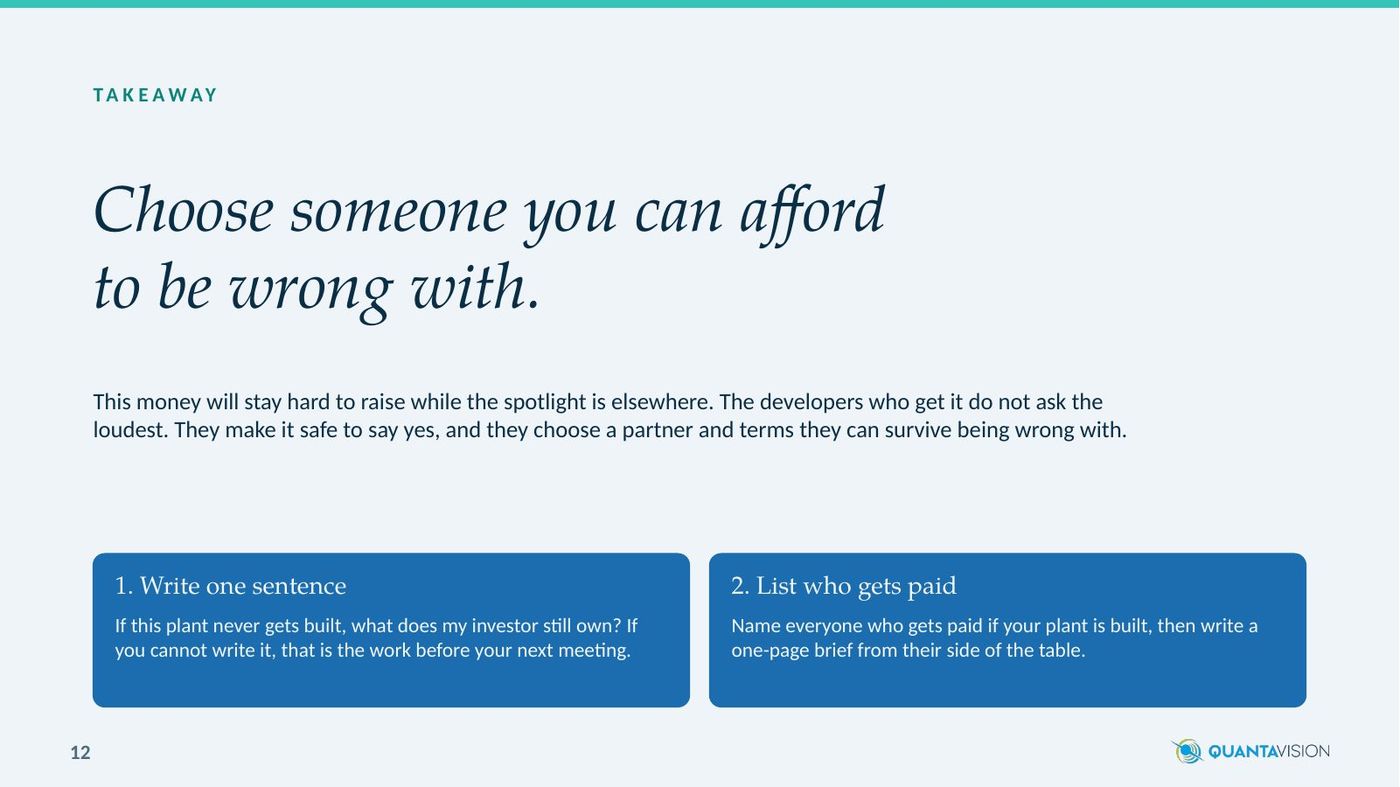
This money will stay hard to raise while the spotlight is elsewhere. The developers who get it do not ask the loudest. They make it safe to say yes, and they choose a partner and terms they can survive being wrong with.
If this plant never gets built, what does my investor still own? If you cannot write it, that is the work before your next meeting.
Name everyone who gets paid if your plant is built, then write a one-page brief from their side of the table.
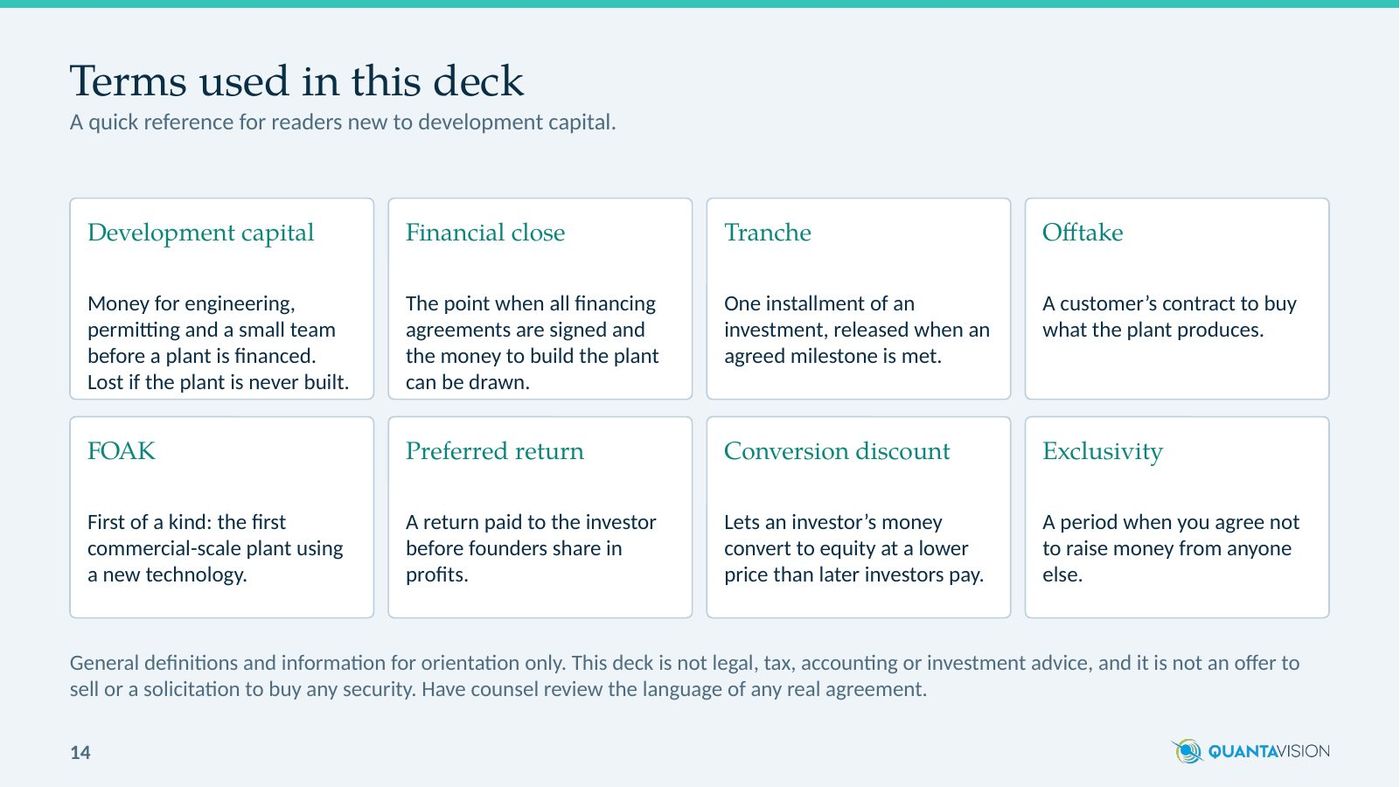
A quick reference for readers new to development capital.
Money for engineering, permitting and a small team before a plant is financed. Lost if the plant is never built.
The point when all financing agreements are signed and the money to build the plant can be drawn.
One installment of an investment, released when an agreed milestone is met.
A customer’s contract to buy what the plant produces.
First of a kind: the first commercial-scale plant using a new technology.
A return paid to the investor before founders share in profits.
Lets an investor’s money convert to equity at a lower price than later investors pay.
A period when you agree not to raise money from anyone else.
General definitions and information for orientation only. This deck is not legal, tax, accounting or investment advice, and it is not an offer to sell or a solicitation to buy any security. Have counsel review the language of any real agreement.
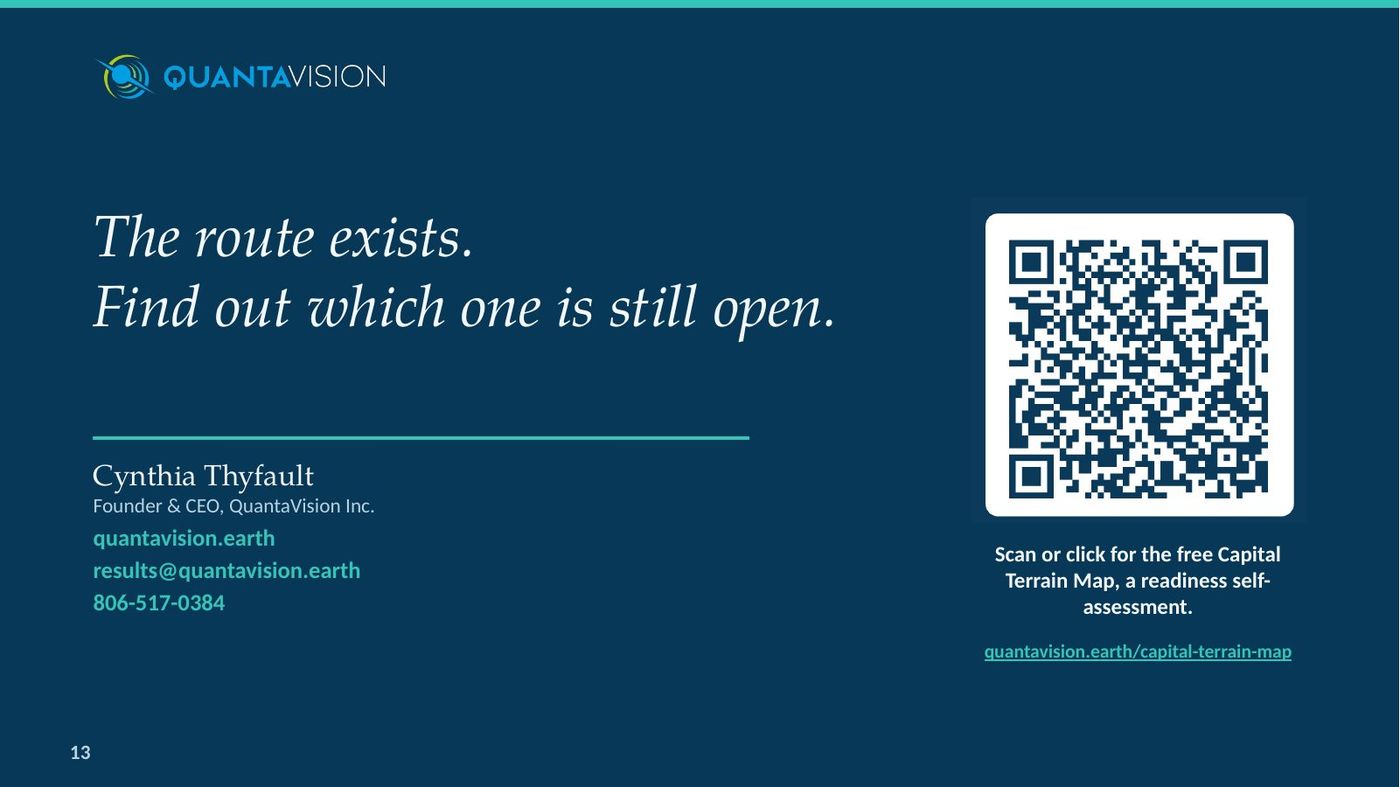
The Capital Terrain Map is a free 27-question capital and deployment readiness self-assessment for innovation founders. If you would rather talk it through, book a call.