Author’s Note
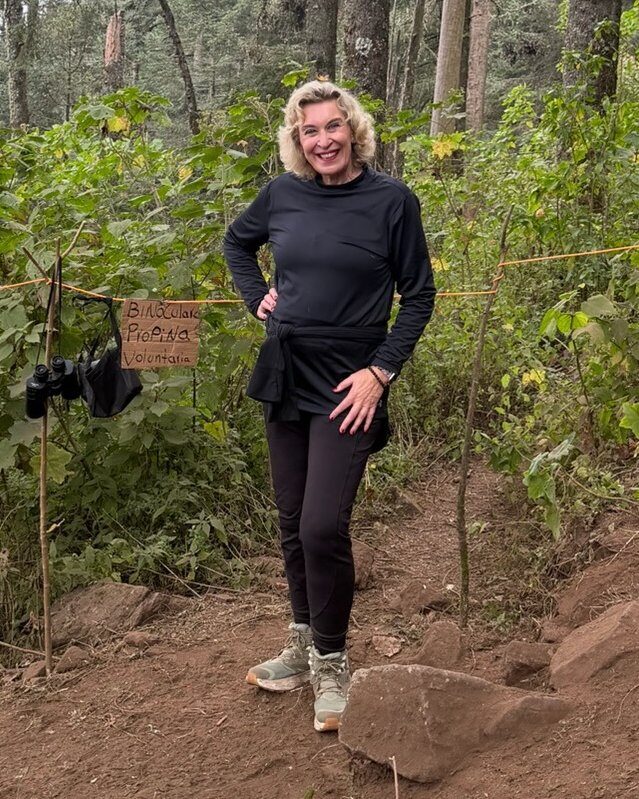
This is one story told in fourteen chapters. It works three ways. Read straight through, it is the account of a climb I made in January of 2026 to a remote mountain in Mexico where the monarch butterflies go to winter — and very nearly the account of how that climb ended me. Read a little deeper, it is everything thirty years of guiding entrepreneurs has taught me about how people get to the top of hard things, and how they die on the way. And read as a whole, it is one woman’s account of what the mountains have taught her — and what they can teach anyone building something hard.
A note on truth: every detail in the climbing chapters happened. I have not embroidered the danger or the beauty. I didn’t need to.
Chapter 1 — Why a Farm Girl Climbs a Mountain
I am not a mountaineer. I want to say that plainly before I tell you anything else, because the whole meaning of this story depends on it.
I grew up on a farm in Kansas, on the prairie, where the land runs flat to the horizon in every direction and the biggest thing on it is the sky. There were no mountains in my childhood. I spent my time outside, in the grass and the wind, but I was raised on flat ground. The few times mountains entered my life, they frightened me. I climbed a big one once in Colorado at a church camp when I was young — it rained on us the whole way up, and I remember being scared, and I remember getting my first kiss on that mountain, which is the only reason I remember the mountain fondly at all. Years later, newly married, I went up a mountain to ski and very nearly killed myself coming down. So I came to this climb with no love affair with mountains. If anything, I had a wary respect for them — the kind you have for a thing that has already shown you it can hurt you.
So why climb one?
Because for about six months I had been talking about mountain climbing. I had been using it as the way to describe what I do — what it actually feels like to build a business, to raise money, to chase something most people would call impossible. The metaphor felt true to me. The thin air. The valley you have to cross. The summit you can’t see. The way people fall. And the longer I talked about it, the more a quiet voice inside me said: you have not done this. You are describing a thing you have not done.
I believe you cannot talk about something you haven’t lived. Not really. Not with the authority that lets you help another person through it. I have built my whole career on a single principle — one I’ll tell you the origin of later in this book, because it cost me something to learn — and that principle is that only results count. Talking is not a result. Climbing a mountain in your imagination is not a result. So when I found myself in San Miguel de Allende, Mexico, for two weeks in January, and I learned that not far away was one of the only places on earth where the monarch butterflies migrate to spend the winter — high up on the side of a mountain, in the cold, in the desolation — I knew. I was going to climb a real mountain. I wanted to see the butterflies. But more than that, I wanted to earn the right to tell this story.
It was a personal test. It was, if I’m honest, a personal responsibility — to have the courage and the guts and the wisdom to go do the hard thing myself before I asked anyone to trust me as their guide through theirs.
I did not know what I was getting myself into. That, it turns out, was the first lesson.
Chapter 2 — The Drive Into Thin Air
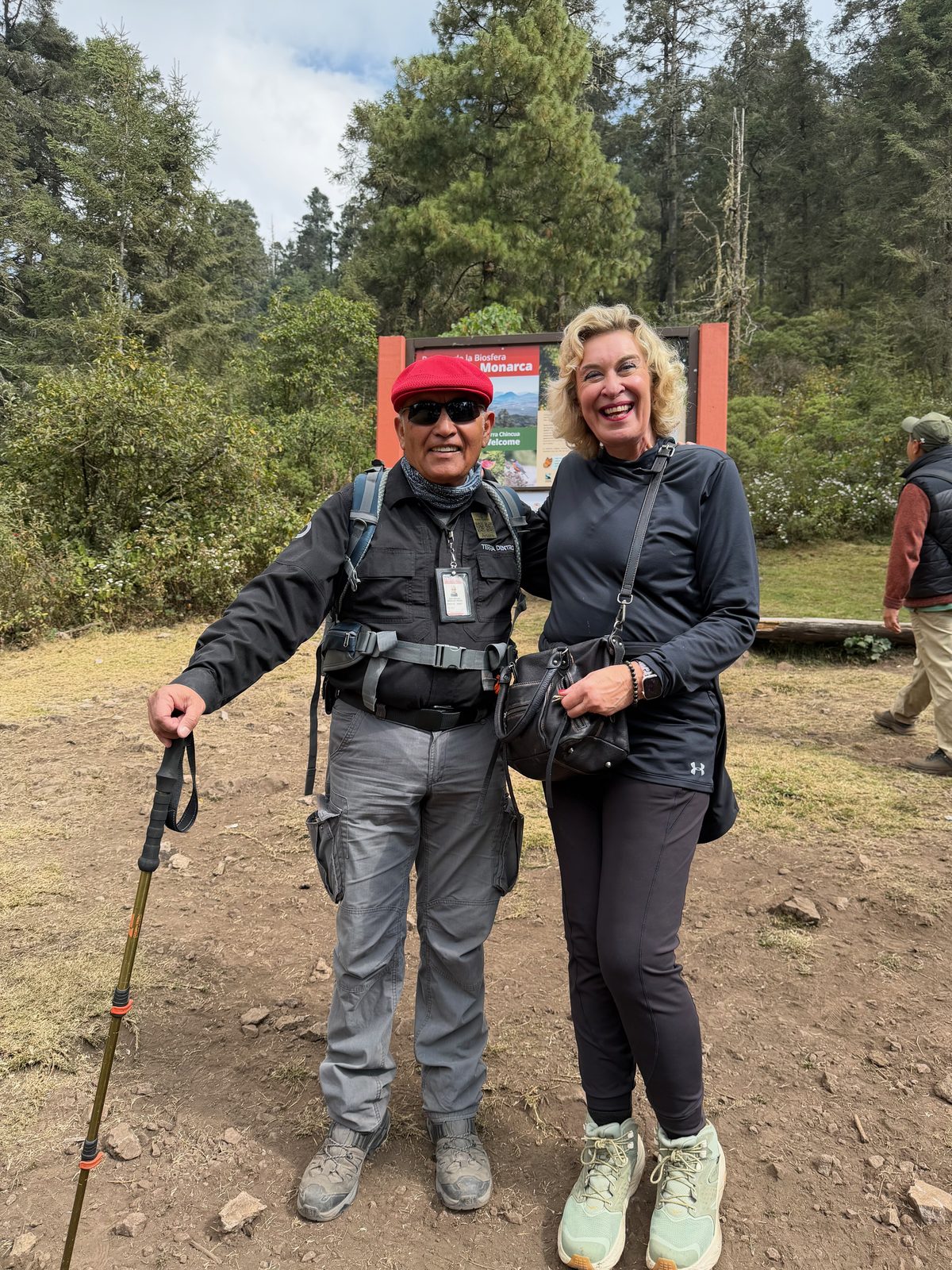
The mountain sits in the Monarch Butterfly Biosphere Reserve — the Sierra Chincua Sanctuary, in the municipality of Ocampo, Michoacán — and the top of it is somewhere around ten thousand feet. You don’t just walk up to it. You drive — for four hours — and much of that drive is the road climbing the mountain itself, up and up and up, the van grinding higher into country that gets more remote and more desolate with every mile. It is winter. The butterflies are up there because something ancient tells them this exact mountainside, in this exact cold, is where they belong.
I did one thing right before I ever left, and it turned out to be the thing that saved my life. I chose the best guide on purpose. I didn’t grab the first tour I found. I asked around — on Facebook, around San Miguel de Allende — who is the best guide to take me to the butterfly reserve? The name that kept coming back was Arturo. Arturo was the best, everyone said so, and so Arturo is who I hired. I want you to hold onto that, because it matters more than it seems: I did due diligence on the person I was going to rope my safety to. I did not yet know how completely my life would depend on that decision.
When we finally got up the mountain and got out of the van and settled in, our guide gathered the group — there were five or six of us — and told us something I thought was a little dramatic at the time. He said he was going to teach us how to breathe. We were up high now, he explained, and the air was thin, and we needed to learn how to take it in. So he taught us. And we started walking, and I breathed the way I was told.
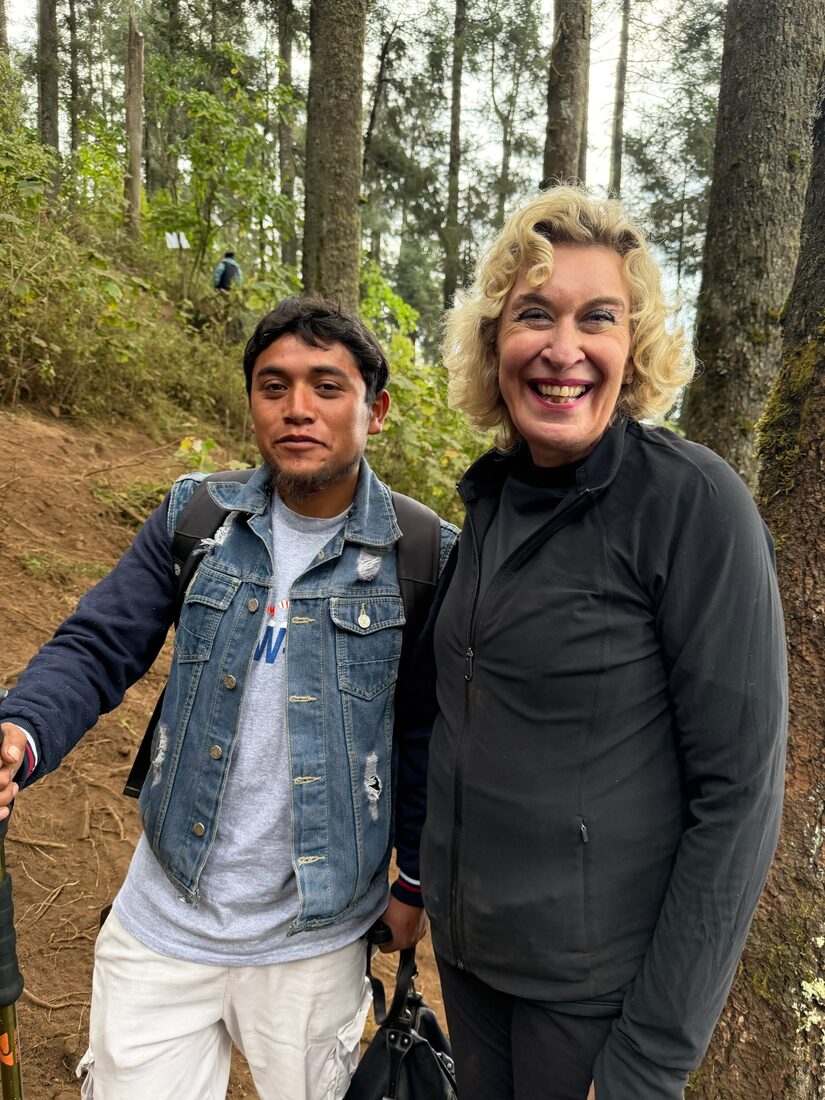
Somewhere along the way, Arturo picked up a young man named Daniel. Daniel would be walking with us — with me, as it turned out, almost the entire time. He was maybe twenty-five, twenty-eight years old. Short, a little stocky, easy in his body in a way I would only understand later. He fell into step near me, quiet and kind, and I didn’t think much of it. I didn’t know yet that the universe had just placed the most important person of the whole journey at my side.
There was a small thing at the start that I keep coming back to. It is the year 2026 — the year of the fire horse — and there were horses on the mountain. You could, it seemed, ride a horse partway up. And I thought, well, that sounds wonderful, and it’s the year of the fire horse, what a perfect thing to do. I wanted to ride. Our guide said no. You should really walk up, he said. We’re going to show you some things.
I didn’t argue. But I want to flag that moment, because it is the first appearance of something this whole book is about. A good guide will tell you no. A good guide will take the easy, appealing shortcut off the table — not to make you suffer, but because he knows what’s on the harder path that you cannot possibly know yet. We’re going to show you some things. You only find out what those things are if you get out and walk.
Chapter 3 — The Death Zone
We had barely started. We hadn’t even really begun the climb in earnest. And then, with no warning at all, I could not breathe.
I don’t mean I was winded. I don’t mean I was short of breath the way you are when you’ve pushed too hard. I mean the air would not enter my lungs. I was gasping — pulling for air and getting nothing. Later, in the van going home, the others would tell me what they had seen, and it frightened me more in the retelling than it had in the moment, because in the moment I was too busy drowning in open air to be afraid. You could not get any air in your lungs, they said. You weren’t even able to take it in. You were gasping. It wasn’t that my lungs were too small or too weak. It was that the air simply would not go in. That is how thin it was up there, and that is what altitude does to a body that isn’t ready for it.
I have struggled with my lungs my whole life. I have breathing problems, allergies, a respiratory system that has never been my strong suit. And here I was, near the top of a mountain, with no cell service, no way to call anyone, nothing around me but cold and trees and a few other people who could not breathe for me. This is the place mountaineers call the death zone — the altitude where there is so little oxygen that the human body begins, slowly, to shut down. It is the single biggest killer on the great mountains of the world. Not the avalanche, not the fall — the altitude itself, the simple, patient absence of air. I was in my own death zone, and I had been in it for about ninety seconds.
And then Daniel moved.
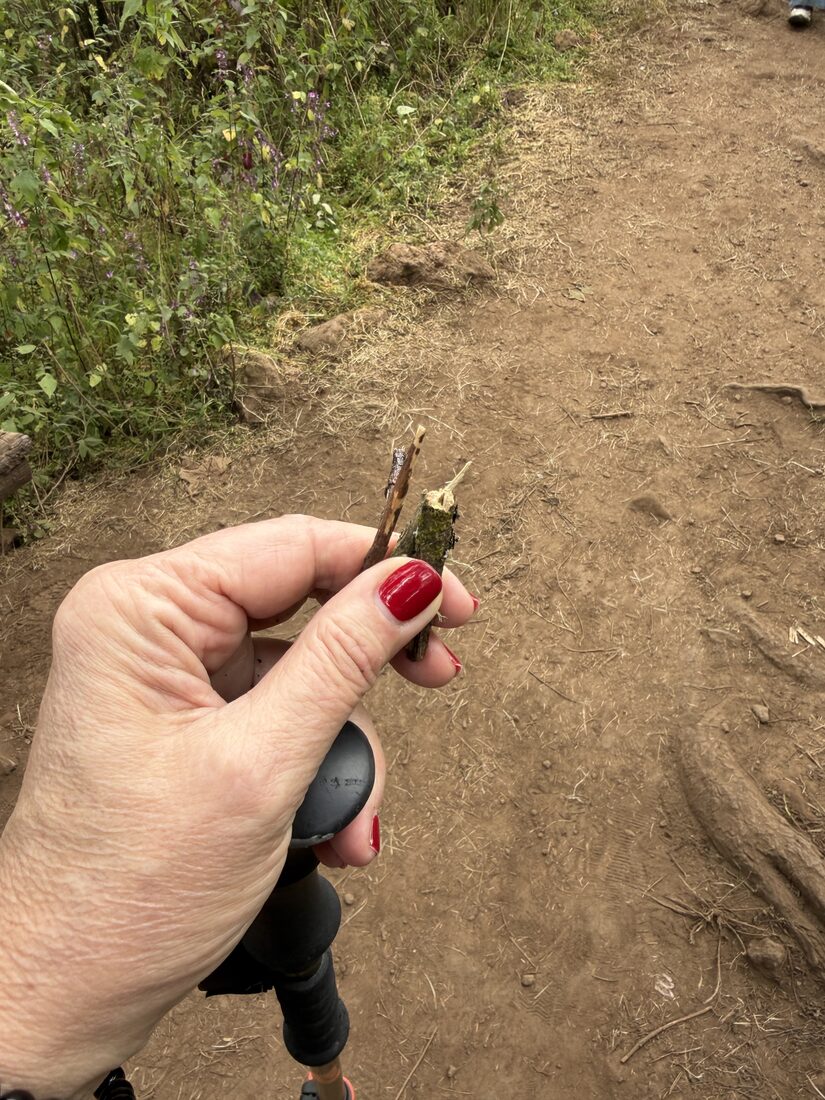
He went to a fir tree — and not just any tree. It was the kind of tree the butterflies themselves live on, the tree that the whole migration depends on. He broke off some branches. He rubbed them hard in the sap of that tree, working the resin into the needles, and he brought them to me and said, simply, breathe these.
I breathed them in. And the moment that sharp, green, resinous smell of the sap hit my lungs, they opened. Instantly. The air came in. I cannot fully explain it to you and I’m not sure I need to. I was suffocating, and a young man pulled a branch off a tree, and it cleared my lungs, and I could walk. To me, with my history of breathing problems, it was not a remedy. It was a miracle. I felt like I had stepped sideways into some kind of miracle state, and from that second on I trusted Daniel completely — because he had done the one thing that mattered, and he had done it without hesitation, because he knew.
Every so often, the rest of the way up, he would quietly get me a fresh branch and rub new sap into it and hand it to me. That is how I climbed the mountain. One borrowed breath at a time, from a tree, handed to me by a stranger who knew exactly what to do.
I have thought a great deal since about what would have happened to me alone. The answer is simple and it is not dramatic: I would have had to turn around. I would have gotten back in the van, unable to breathe, and gone back down the mountain, and I would have missed everything that came after — every miracle, every lesson, the entire reason I had come. Alone, the death zone wins. It is not a test of how badly you want it. Wanting it more does not put oxygen in the air. The only thing that gets you through is someone beside you who has been there before and knows where the branches are.
Chapter 4 — The Narrow Path
Once I could breathe, a strange thing happened: I stopped being afraid of dying and started being afraid of falling.
I do a lot of hiking. I had my hiking boots on. I thought I was reasonably fit and reasonably prepared — and I want to be honest about that belief, because the mountain shattered it, and the shattering was its own gift. I was not prepared. I had brought a bag I slung over my shoulder instead of proper gear. I didn’t have heavy enough clothes for the cold that was coming. I had wanted to bring my camera. And my boots — I had just bought them, and they weren’t broken in, and somewhere in the rush my shoes weren’t even tied right, so my feet were sliding around inside them on terrain where sliding could break a bone. If I hadn’t had hiking boots at all, I never would have made it. As it was, I was right on the edge of not making it, and the reason was simple: I didn’t really know what I was supposed to bring. I didn’t know what the climb would ask of me, so I couldn’t have packed for it.
That is a lesson I now watch entrepreneurs live out constantly. They are certain they’re ready. They’ve done the reading, they’ve watched the videos, they feel fit for the thing. And they show up to the steep part with the wrong gear, brand-new boots that haven’t been broken in, half the equipment they need and some they didn’t, and no idea that the gap exists until they’re already on the face of it. The question is never just are you strong enough? The question is: do you actually know what you need to carry up this mountain — and who is going with you to fill the gaps in what you don’t have, and to take from you the things you brought that you never needed?
The path itself was the next terror. I am tall, with big feet, and the “path” was barely a path at all. It was a narrow rut cut into the steep side of the mountain, the kind of trail where you have to step on roots and branches to keep your footing, where one wrong placement of a foot too large for the track could send you down. It was steep. It was slippery. It was, honestly, dangerous. And now I had two jobs instead of one: keep breathing, and don’t fall and break a leg in a place with no cell service and no easy way down.
They gave me a stick to steady myself. And Daniel was there — at the worst sections he would stand beside me, brace me, help me find the next step. The whole group was helping me with what little I had. But the steadiness came mostly from the man beside me who never seemed to doubt where my next foot should go.
This is the chapter where I first understood, in my body, why climbers rope themselves together. Not because they’re weak. Because the surface lies. The ground that looks solid is sometimes a thin bridge over a long fall, and the only thing that saves you when you break through is the person on the other end of the line who has the footing to hold you. I had a rope that day. His name was Daniel.
Chapter 5 — The Ten Things That Can Kill You
I want to step off my own mountain for a moment and tell you about the great ones — Everest and her sisters — because what kills people up there is not mysterious, and it maps, almost perfectly, onto what kills businesses down here.
Mountaineers don’t romanticize the mountain. They study it. They keep records of how people die, because respect for the hazard is what keeps you alive. When researchers reviewed the deaths on Everest above base camp across several decades, they found that more than half were traumatic — falls, avalanches, collapsing ice — and most of the rest were the slow shutdown of a body starved of oxygen and warmth. Here are the ten that take climbers most often. The first nine are things the mountain does to you. The tenth is something you do to yourself — and it’s the one you can actually control.
One. The death zone — hypoxia. Above about eight thousand meters there simply isn’t enough oxygen to keep a human alive for long. The single largest factor in high-altitude death is the altitude itself. In business there are environments that degrade you the longer you stay in them — the underpriced contract, the dying market, the partnership that drains the life out of you. Some altitudes are not meant to be lived in. They are meant to be passed through quickly, with a plan to descend. I know this one in my lungs now.
Two. Cerebral edema — HACE. Fluid swells the brain, and the first thing it steals is judgment. Climbers with HACE have walked off cliffs convinced they were perfectly fine. This is the founder so burned out and over-leveraged that they can no longer see clearly, making confident decisions everyone around them can tell are wrong. The cruelty of it is that the condition hides itself from the only person who needs to know it’s there.
Three. Pulmonary edema — HAPE. The lungs fill with fluid and the climber drowns slowly in open air. It is the price of climbing faster than the body can adapt. Founders do this constantly — scaling headcount and spend and promises faster than the business underneath can acclimatize. It doesn’t feel like danger. It feels like momentum. Right up until you can’t breathe. (I have spent thirty years telling clients to build it smaller for exactly this reason — get cash-flow positive first, then grow — and I’ll come back to that.)
Four. Avalanche. The deadliest single events on the mountain. One avalanche through the Khumbu Icefall in 2014 killed sixteen Sherpas in moments — at the time the worst day in Everest’s history. The avalanche is the external shock you can’t prevent: the market crash, the lawsuit, the regulation that lands overnight, the anchor customer who leaves. You can’t stop it. You can only read the conditions, avoid the most exposed routes at the most dangerous times, and never be careless about where you’re standing.
Five. Falls. The leading category of traumatic death. A single misstep on a line you’ve walked a hundred times. Most business falls aren’t dramatic either — the sloppy contract, the email sent in anger, the corner cut because you were tired. Competence doesn’t protect you from carelessness. Sometimes it’s what sets you up for it. (I nearly fell a dozen times on that narrow rut, and not one of those near-falls was about strength.)
Six. Crevasses. Cracks in the glacier, hundreds of feet deep, hidden under a skin of snow that looks exactly like solid ground. The hidden risk is the one that gets you, because you never saw it — the unfunded liability, the single point of failure, the dependency you forgot you had. This is precisely why climbers rope together: so when one person breaks through the surface, the others can hold the line.
Seven. Hypothermia. Cold, wind, and altitude conspire to shut the body down; together with hypoxia, exposure accounts for roughly a third of the non-traumatic deaths on the high peaks. Hypothermia is the slow bleed — not one disaster but a steady, unnoticed loss of warmth and capacity. In a business it’s the quiet erosion: margins thinning, morale cooling, the founder’s own fire going out by degrees while everyone keeps insisting things are fine. It was thirty to forty degrees on my mountain, and there was nowhere warm to stop.
Eight. Frostbite. Tissue freezes and dies, starting at the extremities, and sometimes the only treatment is to cut the part off to save the body. Founders hate this lesson. To save the whole, you sometimes have to lose the part — a product line, a region, a beloved hire, a piece of the original dream. It is grief. It is also, sometimes, the only way the body survives.
Nine. Storms and weather. Climbers don’t die because the weather turned. They die because they were in the wrong place when it did. The summit window on a great peak can be a matter of hours. Timing is everything, and so is the humility to wait. Business has weather too — economic cycles, funding climates, cultural moments — and reading the window, and having the patience not to launch into a storm, is its own form of survival.
Ten. Summit fever. This is the one that should frighten you most, because it isn’t a condition. It’s a decision. Summit fever is the all-or-nothing compulsion that drives a climber to keep going despite exhaustion, frostbite, and failing light, because they are so close and turning back feels like failure. More people die on the descent than the ascent, and summit fever is a great part of why — they spend everything reaching the top and have nothing left to get down. In business it is the founder who cannot stop, cannot pivot, cannot admit the route is closed — who pours the last of the runway into one more push toward a summit the mountain has already closed for the season. I have been that founder. I’ll tell you that story, because it nearly ended me, and because learning to beat summit fever is the whole reason I’m any good at my job.
Nine of those killers are the mountain. The tenth is you. Make peace with the difference and you’ve already survived more than half of what takes people down.
Chapter 6 — The Valley
Between the trailhead and the summit there is a long middle, and the long middle is where it’s won or lost.
Mountaineers don’t have a tidy name for it, but founders do. They call it the valley of death — the stretch after the easy optimism is spent and before the thing can sustain itself, the place where most ventures quietly die. Not at the start, when everyone is fresh and the story is exciting. In the middle. In the thin, cold, unglamorous middle where the summit gives you nothing back yet and every step costs more than the last.
My valley looked like this. It was cold — thirty, forty degrees — and it stayed cold. There was no good place to rest, and so we did not rest; we could not, really, because stopping in that cold with that little air was its own kind of danger, and so we kept moving. The guides would pause to show us things — a particular plant, a fact about the butterflies, the way the firs and the cedars grew, the enormous old trees — and those pauses were gifts, little hits of meaning and beauty handed to us to keep us going. But we always started walking again. There was nowhere to stop and nothing to do but climb.
And here is the strangest part of the valley, the part that has stayed with me most: we were climbing toward butterflies we could not see. The whole reason we were on that mountain was up at the top, and the entire way up, there was no sign of it. No flutter, no color, nothing. I had seen the videos. I had seen other people’s photographs of skies full of orange wings. I half-expected to round a bend and find some grand cathedral of butterflies. But the valley gives you none of that. The valley just gives you cold, and steepness, and the next step, and the quiet, growing question of whether the thing you came for is even really up there.
That is the test of the middle. You are spending everything on faith in a summit you have not seen and cannot yet prove. The people who survive the valley — on the mountain and in business — are not the ones with the most strength. They are the ones who can keep putting a foot down toward an unseen top, trusting the guide who says it’s there, while the cold tells them to quit and the thin air tells them they’re a fool. I kept walking because Daniel kept walking, and because some part of me had decided to believe him.
When you have crossed your own valley of death — when you have built the thing in the cold years when no one believed it and nothing came back — you never forget the feeling. And you never again mistake the middle for failure. The middle is not failure. The middle is the climb.
Chapter 7 — The Frustrating Hour
I want to tell you about the hardest part, because it was not the part I expected, and because of all the chapters in this book it is the one I most want an entrepreneur to read twice.
The hardest part was the top.
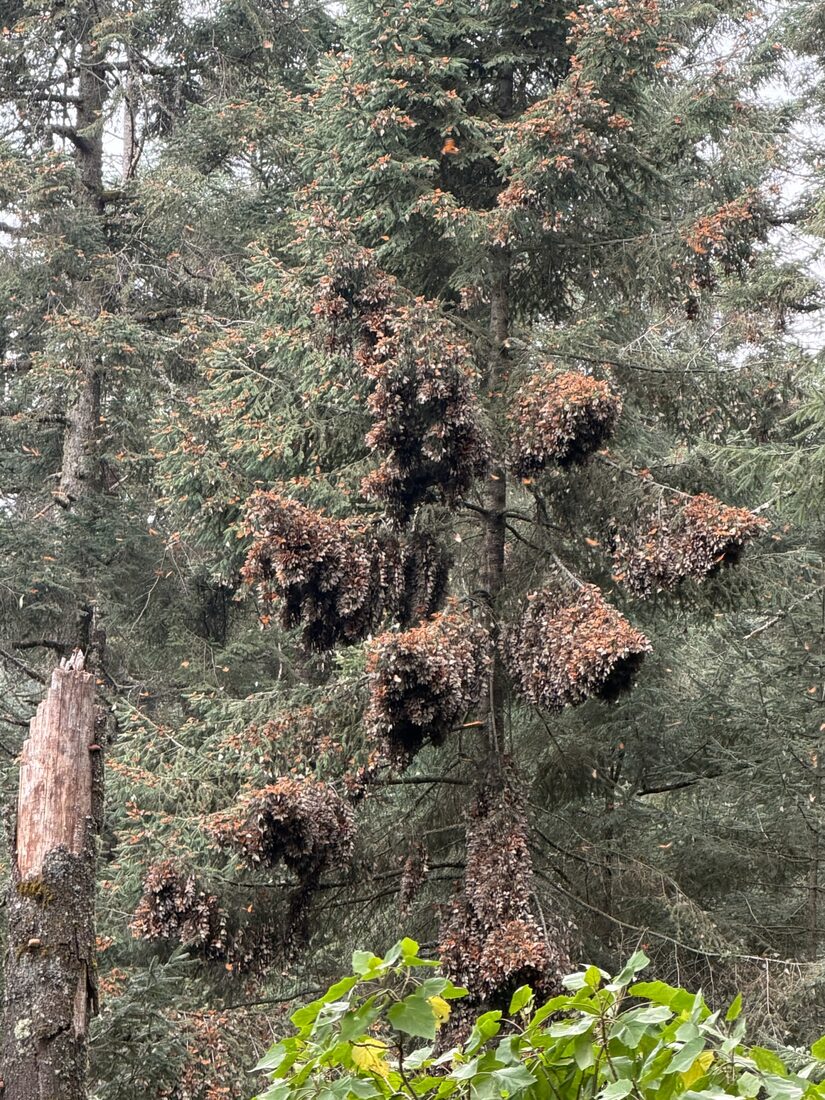
We reached the butterfly preserve — and it is not what you picture. You imagine somewhere grand, a vista, an expanse. It is a small spot on the side of the mountain, maybe room for twenty people, where the monarchs cluster on the fir trees. And when we arrived, the butterflies were not flying. They were just there, packed onto the branches, still, because it was cold. Normally they let you stay twenty minutes at that little spot and then move you along, because so many people want up there and the space is so small. But our guide knew everyone on that mountain — everyone — and because of that, they let us stay an hour. They found me a little ledge to perch on and made me a place to sit.
So there I was. I had nearly died to get up there. I had borrowed every breath from a tree. I had inched up a knife of a path, terrified of falling, my feet sliding in unbroken boots. I had crossed the whole cold valley on faith. And now I was at the top — sitting on a ledge in the cold, looking at a clump of motionless butterflies, and nothing was happening.
And I thought: Why am I up here? What am I even learning? Is this all there is?
I want you to sit in that with me, because I have felt that exact feeling a hundred times in business and so have you. It is the feeling of being at the very pinnacle of a thing you have bled for, right before the gift arrives, and the gift is not arriving. It is the moment in a financing when you have done everything — every call, every document, every concession — and the close just will not come, and you sit there at the top of all that work feeling like you have paid your dues, like it should be happening, and it isn’t. That is not a comfortable plateau. It is the most dangerous place on the whole climb. Because you are at the end of your money, and the end of your patience, and the end of your emotional and mental capacity all at once, and the frustration and the anger and the sheer terror that it might never come can blind you to the real dangers right in front of you. People make their worst decisions in that hour. People quit in that hour, twenty minutes before the sun.
Because here is what happened on my mountain. After about an hour — an hour of cold and doubt and why am I here — the sun came out.
And the monarchs began to move. I learned later why, and it undid me a little. A butterfly has no heart. For it to fly, its body has to warm up enough that the fluid inside it begins to move on its own and reach its wings. It cannot fly cold. It physically cannot. It has to wait for the sun. And when the sun finally touched them, they warmed, and the fluid moved, and the wings opened, and they lifted off the trees and filled the air — and the guides led us down little paths into the middle of it, and the butterflies flew all around us and over our heads, more and more of them, excited and exuberant, a whole celebration breaking open at the top of that steep, misty, freezing mountain.
I sat in the middle of it and I thought: what does this remind me of? God, why are you showing me this? What am I supposed to learn? And the answer that came was about love. People describe being in love as feeling butterflies — and there I was with the actual butterflies swirling around my head, and the feeling in my chest was exactly that, the warmth and the lift and the joy of it. We got to stay almost another hour we were never supposed to have. I had come all that way and nearly not made it, and the reward was not the summit. The reward was on the far side of the waiting. It came only after the frustrating hour, only after the sun, only to the people who were still sitting on the ledge when the cold finally broke.
The butterfly cannot fly until it is warm. Neither can the thing you are building. And you do not get to choose the hour the sun comes out. You only get to choose whether you are still up there when it does.
Chapter 8 — The Power of No
Now I have to tell you about the freight train.
Early in my career, before I had learned most of what I know now, I was asked to become the CEO of a company. We were running out of money. We didn’t have sales. We didn’t have a lot of the things a company needs to survive. And running that company felt exactly like riding a freight train at full throttle down the track, pushing as hard as I could toward the finish line, praying to God I could slam on the brakes before we hit the brick wall I could see coming straight at us. That is summit fever. That is the tenth killer, the one you do to yourself. I could not stop. I could not pivot. I could not admit the route was closed.
We crashed and burned. The company shut down. And on the way down I discovered there had been fraud inside the board of directors — all kinds of terrible things I hadn’t seen because we were moving too fast, too desperate, too fixated on the summit to look at the ground we were actually standing on. We couldn’t stop the train, and so we flew right off the mountain.
That was one of the most important lessons of my life, and I learned it early enough to build everything else on top of it. Here is what it taught me. When things get crazy now — when the pressure is highest and the temptation to push harder is strongest — I slow the train down. I stop. Because only when the train slows can I think clearly enough to see where it actually needs to turn, and how we regroup, and what other route exists. Most people never learn this. They think the answer to a stuck climb is to climb harder at the same closed wall. The answer is almost always to stop hurling yourself at the closed pitch long enough to see the open one.
So what is the decision, when you hit a wall you can’t climb? Over thirty years I’ve come to run it as a sequence, and it is the same on the mountain as in the boardroom:
First, read the real conditions, not the ones you wish were true. Is this wall genuinely impassable, or am I just exhausted and scared? Summit fever lies, and so does fatigue. Get the honest read before you decide anything.
Second, check your real reserves. How much air, daylight, strength, and money is actually left — not in the best case, in the real one? You make the next decision against what you have, not what you hoped to have.
Third, find the other line. Mountains almost never offer just one route. There is the couloir to the left, the ridge to the right, the option to descend, rest, and come back on a better day. In business it is the pivot, the new channel, the different customer, the changed product, the partnership instead of the solo push. There is always another way to get there. You just have to be willing to compromise and change to find it — and the climbers who make it through the valley of death are exactly the ones who can.
Fourth, decide who you’re protecting. The best climbers never make life-and-death calls alone inside their own heads, because altitude impairs the very judgment they need most. And the goal is never summit at any cost. The goal is that everyone on the rope comes home, ready to climb again.
The power of no runs both directions. Sometimes you have to say it; sometimes you have to be willing to hear it. I had a client developing a renewable diesel project who could not get an off-take agreement to stick. They had a mediocre, dragging partnership that went on and on while the clock ran out. So we said no to it. We made a few more calls — and started a quiet bidding war — and the very best partner stepped up with an exceptional offer, and my client increased their profitability simply by being willing to walk away from the deal that wasn’t coming together. That is the power of no working in your favor. It saves you in two ways: you stop wasting time, and you stop wasting money trying to force a thing that the universe keeps telling you isn’t right. Our pride and our ego want to make it work. But if you are straining that hard to make it work and it still won’t come together, that straining is itself the signal. It’s not going to be good.
I learned the deepest version of this lesson the hardest possible way, at the very beginning. When I was first starting my consulting firm, I was trying to win the business of a leather trader down in Fort Worth — I was working with an economic development group to start a tannery up in the Texas panhandle, and I kept going back to him, kept trying to find a way in. And one day he sat me down and said, flatly, I can’t work with you. I asked why not. He pointed at a wood-carved sign on his wall that said only results count, and he said, You don’t have any results. I can’t work with anyone who has no results.
I drove home devastated. I had two little children. I did not know how we were going to eat or what was going to happen to us. It was a complete, brutal no.
The very next day, the phone rang. A company’s CEO had just quit, and they didn’t know anyone else who understood their business — it was a straw board business — and they asked me to step in as CEO. I had nothing else in front of me, so I said yes. That company was not a great success. But it gave me results. It gave me mentors. It gave me a network and a track record I did not have the day the leather trader turned me away. The “no” that broke my heart on a Tuesday pointed me straight at my destiny on a Wednesday. And “only results count” became the spine of my entire career — because I had felt, in my body, what it was to have no results and be turned away, and I decided I would spend my life getting results for other people and helping them get past the no to find the route that actually leads to the top. That is the passion of my work. I love helping clients get results.
The freight train will tell you the only honorable thing is to keep going. The freight train is wrong. The bravest, smartest, most profitable thing on the whole mountain is sometimes to stop, hear the no, and turn.
Chapter 9 — Why Anyone Would Do This
If the mountain can kill you ten different ways, the only honest question is the one everyone asks: why? Why would anyone do this? What do they actually want?
The honest answer is rarely “to reach the top.” The summit is the excuse, not the reason.
When psychologists study why people climb, they find that mountains uniquely combine a handful of things human beings are starving for: a clear, measurable challenge; real risk that sharpens you; raw beauty; and a kind of meaning ordinary life almost never offers. Hard, concrete goals give us a sense of competence and progress. Repeatedly facing genuine risk builds skill and confidence and resilience. And the altitude itself — the scale, the silence, the light, the detachment from everyday noise — produces something close to transcendence. Climbers consistently come back not with a trophy but with a changed sense of what matters. I came back changed. I’ll tell you exactly how in the closing chapters.
What climbers are really after, in other words, is to become a particular kind of person — someone who found out what they were made of in the one place that doesn’t let you lie about it. Entrepreneurs want precisely the same thing and are often too guarded to say so out loud. It was never really about the money or the exit. It was about building something real against real odds and discovering you were equal to it.
That reframes courage entirely. Uncommon courage is not the absence of fear — the fearless climbers die young. I was terrified on that mountain, twice over, and that fear was not weakness; it was information. Real bravery is doing the frightening, necessary thing while afraid, with full knowledge of the ten ways it can end you. And real determination is not gritting your teeth toward the top at any cost. It is the willingness to suffer through the valley, to wait through the frustrating hour, to turn back when you genuinely must, and to come climb again another day. The mountain does not reward recklessness. It rewards people who want it badly enough to be patient and humble.
Here is the part that should make every founder sit up. When researchers profile the people who actually succeed at high-altitude climbing, the portrait is uncanny. Climbers tend to score higher than the general population on extraversion and conscientiousness, and notably lower on neuroticism — they stay calm when it counts. They are sensation-seekers, drawn to challenge and novelty. But the climbers who are the most successful are not the wild cowboys. They are the more emotionally stable, more open-minded, and — this is the surprise — more risk-aware ones. Bold and disciplined at the same time. The reckless ones don’t last. The great ones are brave and calibrated.
Read that again as a description of a great entrepreneur. Driven and high-energy. Organized and reliable under real pressure. Calm in chaos. Hungry for the hard thing. And — the trait that separates the legends from the casualties — calibrated about risk rather than addicted to it. Both the climber and the founder live in a narrow band between courage and recklessness. Lean too far toward caution and you never leave base camp. Lean too far toward bravado and the mountain takes you. The entire art is staying on the line.
And the deepest contrast is this: the amateur thinks the climb is about the summit. The professional knows it’s about the system — the acclimatization, the supply caches, the weather windows, the turnaround rules, the rope team, the guide. Mediocre founders chase summits. The ones who build something that lasts fall in love with the system that gets them up and back down, again and again, across many mountains and many years.
Chapter 10 — The Sherpa
Here is the part the magazines leave out. The famous climber in the summit photograph did not get there alone. Walking ahead of them, often carrying two and three times the load, was a Sherpa — and on most expeditions, the Sherpa is the reason anyone comes home at all.
Sherpas are not porters. They are elite alpinists. They scout and fix the ropes ahead of the climbers, before the clients ever arrive at the hard sections. They ferry the oxygen and the tents and the food up to the high camps. They read the ice and the weather out of hard-won experience. They manage the client’s pace, and they watch for the first signs of altitude sickness that the client cannot yet feel in their own body. Some of them carry physiological adaptations that let them use oxygen more efficiently at altitude. But mostly what they carry is knowledge of this specific mountain, earned by climbing it season after season, through conditions that have killed people they knew. They take on enormous risk for a fraction of what the climber pays for the privilege of being led. And without them, the summit photograph simply does not exist.
That is the most honest picture I know of what I have actually done for thirty years.
Let me tell you the rest of Daniel, because he taught me what the word means. He was young — twenty-five, twenty-eight — short and stocky, and from the first minutes it was clear he knew an extraordinary amount about the plants, about holistic practice, about that mountain. He was kind. And above all he was in his element. He lived in that space. I knew nothing — I had never been there, I genuinely did not know what I had gotten myself into — and he was completely at home. He understood what I was going through before I did, because he takes people up that mountain every single day. He knew what I was about to experience not just in my body but in my heart, and he stayed beside me the whole way, happily, looking after me, keeping me safe, making sure I had the experience I had come for.
And the thing that undoes me, still, is where his knowledge came from. On the way down, when it was just the two of us, he told me — in Spanish, which I’d been studying — about his seven-year-old son, and about his parents, who were holistic healers, and who had taught him everything he knew about the plants and the wilderness and how to take care of a person on that mountain. His knowledge was generational. It had been handed down through his family over a lifetime and longer. He was young, but what he carried was old. That is the difference between a real guide and someone who read the brochure. Daniel’s sap branch did not come from a tip he’d picked up that season. It came from a family that had been keeping people alive on that mountain for as long as anyone could remember.
That is what a thirty-year advisor is. Not a consultant who hands you a deck and waves from base camp. The guide who has climbed this mountain, through this weather, more times than you have, and goes up ahead of you to fix the ropes. The one who has watched founders catch the confident, impaired judgment of altitude — the HACE that hides itself from the person who has it — and says the thing no one on the payroll will say. The one who knows which crevasses are hidden under fresh snow because they have lost people in them. The one who manages your pace so you don’t drown your own lungs by climbing faster than your foundation can bear.
I have done this work, and I love it, so let me show you what it looks like from my side of the rope. I had a client with a genuinely good business model — making ethanol out of dairy digestate — who needed an off-take agreement that would actually stick, that a bank would trust, so they could secure their USDA loan. Because of my deep bench of contacts in the industry, I was able to help them negotiate that contract, and we worked through the problems fairly quickly. That is fixing the rope ahead of the climber. That is the guide who knows everyone on the mountain — the same thing that bought me an extra hour with the butterflies — turned into a bankable deal.
For years I watched developers try to build bigger and bigger and bigger plants, chasing the grandest possible summit. Now I ask the opposite question: how small can you build it? Can you make something that throws off a little money, gets you cash-flow positive, and lets you build up from there? The clients who build smaller are the ones who survive to build bigger. That is me managing your pace so you don’t get HAPE.
And once I told a client to stop trying to invent every piece of his technology himself — to go buy the commercial equipment that already existed and put the pieces together — and it moved his entire project forward by years instead of leaving him stranded on a wall of his own making, trying to summit a peak nobody needed him to climb. Taking the risk out of a project in the right places, helping someone see the route they couldn’t see on their own — there is nothing I love more.
The parallel runs all the way down. The Sherpa does not summit for you. It is still your climb, your name, your flag, your company. But the Sherpa changes your odds of survival more than any other single factor on the mountain. A thirty-year advisor does the same — not by taking the climb from you, but by making sure you are not making the deadliest decisions of your life alone, in thin air, with impaired judgment, when the cost of a wrong call is everything you have built.
Chapter 11 — How to Choose and Work With Your Sherpa
Before I tell you how we came down the mountain, I have to tell you the one thing I did right before I ever left for it — because it’s the thing that saved my life, and almost nobody talks about it.
I chose the right guide. On purpose. Before I went.
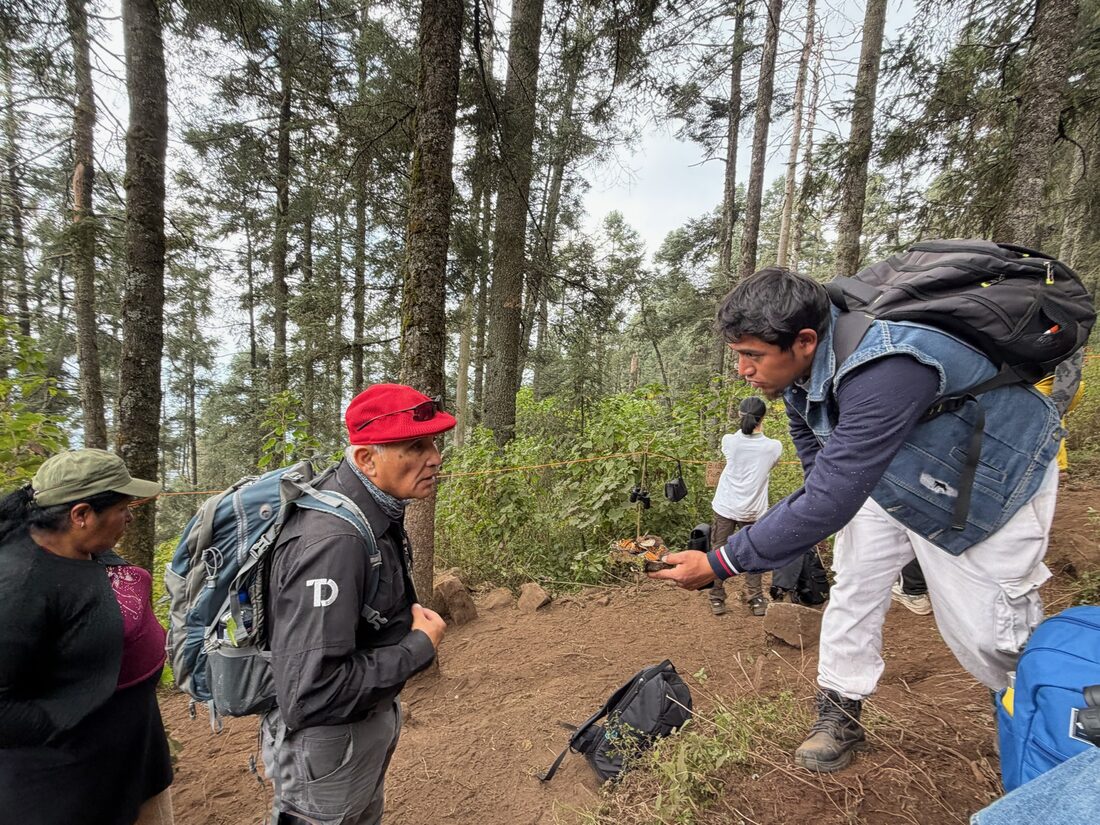
I didn’t grab the first tour that came up in a search. I didn’t pick the cheapest, or the most convenient, or the one with the prettiest website. I asked. I went to the people who knew that place — I asked around on Facebook, I asked people in San Miguel de Allende where I was staying — and I asked one specific question: who is the best guide to take me to the butterfly reserve? The same name kept coming back. Arturo. So Arturo is who I hired.
And here is the part I didn’t even know I was buying. When we got up the mountain, Arturo brought in a young man named Daniel to walk with us — and it turned out Arturo always used Daniel, because Arturo knew exactly what Daniel was capable of. The best guide I could find had, in turn, vetted his guide. I wasn’t trusting one person. I was trusting a chain of earned trust — a community’s reputation, pointing to Arturo, pointing to Daniel, pointing to the sap branch that opened my lungs when the air ran out.
I had done my due diligence on the person I was going to rope my life to. At the time it felt like ordinary planning. Looking back, it was the most important decision of the entire trip, and I made it from my kitchen table before I ever touched the mountain.
Most entrepreneurs do the opposite. They’ll spend months researching a software purchase and then pick the person they trust with their entire business — their money, their growth, their life’s work — based on a referral they half-remember or whoever happened to be in the room. The guide matters more than the gear. The guide matters more than the route. On a hard climb, the guide is the single biggest factor in whether you come home. So let me give you what I wish someone had handed me: how to choose one, and how to actually work with one once you have.
How to choose a guide
One — they have actually climbed this mountain, and have the results to prove it. Not a mountain. This mountain. There is a world of difference between someone who understands climbing in theory and someone who has been up this specific face, in this specific weather, more times than you can count. Ask what they have actually gotten people to the top of. Ask for results, not credentials. I built my whole career on a sign that said only results count, and it applies most of all to the person you trust to guide you. Anyone can talk about the summit. You want the one with the track record of getting people up and back down.
Two — their knowledge is earned, not borrowed. Daniel’s knowledge wasn’t a tip he picked up that season. His parents were holistic healers; he had been taught the plants and the wilderness and the mountain over a lifetime, through generations. When he handed me that branch, he wasn’t guessing. That is the difference between a real guide and someone reciting a brochure. In an advisor, listen for whether their counsel comes from having lived it — the crash, the bad board, the deal that fell apart — or whether they are repeating something they read. Scar tissue is a credential.
Three — the community already knows who they are. The best guides have a reputation you can find before you ever meet them. I asked who was best, and one name kept surfacing. Do that. Ask the people who have made the climb you are about to make: who got you through it? The right name tends to come back more than once. Be suspicious of someone whose only references are the ones they hand you themselves.
Four — they know everyone on the mountain. Because our guide knew everyone up there, they let us stay a full hour at the summit when the limit was twenty minutes. That access wasn’t a bonus — it was the reason I got the full experience. A great advisor’s network is part of what you are hiring: the introductions they can make, the doors they can open, the bankable deal they can help you reach because they know the right person. I have watched a client land a bankable off-take agreement and secure a USDA loan largely because of who I could call. That web of relationships is often worth more than the advice itself.
Five — they will tell you no. On my mountain, when I wanted the easy way up — ride a horse, skip the hard part — the guide said no. Walk. We’re going to show you some things. A guide who only ever agrees with you isn’t guiding; they are being paid to nod. The right one overrules you when your judgment is impaired by exhaustion or excitement or fear — which, at altitude and under pressure, is exactly when you need overruling. If an advisor has never once told you a hard truth you didn’t want to hear, you don’t have a guide. You have an echo.
Six — they carry real weight, with skin in the game. Sherpas take on enormous risk, often for a fraction of what the climber pays, and they carry two and three times the load. Look for a guide whose interests are genuinely tied to your outcome and who will carry real weight for you — not someone who profits the same whether you summit or fall. Alignment is everything.
Seven — they are in their element, and they are kind. Daniel was completely at home on that mountain — calm, easy, unhurried in a place that terrified me. And he was kind. Competence without kindness will get you up the hill, but you won’t trust them when it counts, and trust is the whole game when you can’t breathe. Watch how someone is in the hard moment. The right guide gets steadier as things get worse.
How to work with a guide once you’ve chosen one
Choosing well is only half of it. I have watched people hire a great advisor and then refuse to be guided — and that is just an expensive way to climb alone. Here is the other half.
Let go and let them lead — especially in the danger zone. I am a fiercely independent person. Most entrepreneurs are; we have the big vision and we are used to running at the front of the pack. But on that mountain, depending on Daniel was easy, for one simple reason: the alternative was dying up there. Whatever he told me to do, I did. There is a time to debate your advisor and a time to simply do what they say because the air is thin and they can see what you cannot. Learn the difference, and when you are in the death zone, stop arguing.
Let them fill the gaps you don’t know you have. I showed up certain I was prepared, and I was wrong about almost everything — wrong boots, wrong bag, not enough clothing. Daniel filled gaps I didn’t even know existed. Your advisor will see holes in your plan that are invisible to you precisely because you are inside it. Don’t get defensive when they are named. That is the job. That is what you are paying for.
Honor the turnaround. The hardest discipline in all of climbing is turning back when the guide says it’s time, even when the summit is gleaming. If you have chosen someone with real judgment, the moment they tell you to slow the train or change the route is the moment to take most seriously — not the moment to override them because your ego wants the summit today.
Build the relationship — it’s forged on the descent. The deepest part of my climb wasn’t the summit. It was coming down, just Daniel and me, when he told me about his son and his parents and his life. The real bond with the person guiding you doesn’t form in the triumphant moment at the top. It forms in the quiet, unglamorous stretches — the regular check-ins, the hard conversations, the long way down. Invest there. A guide who knows you well guides you better.
Value them, and pay them what the role is worth. Sherpas are too often underpaid for work that is literally keeping people alive. Don’t make that mistake with the people guiding your business. The right advisor is not a cost to minimize; they are the reason you survive the climb and reach a summit you couldn’t reach alone.
A few red flags
Walk away from the guide who waves at you from base camp and sends instructions — you want the one who ropes in beside you. Be wary of anyone who is all summit and no descent, who gets you to the launch and disappears before the hard work of delivery. Distrust the one who never tells you no. And never hire the guide with no results, no matter how good the story sounds. I was once turned away for having no results myself, and it was the right call. Only results count, on both ends of the rope.
Field notes — your due-diligence checklist
Before you rope in with any advisor, get honest answers to these:
- Have they actually climbed my mountain — my industry, my stage, my kind of problem — and what specifically have they gotten people to the top of?
- Is their knowledge earned and lived, or recited?
- When I ask the people who have made this climb, does this person’s name come back?
- What doors and relationships does their network actually open for me?
- Can I point to a time they told a client something hard and true? Will they do that for me?
- Are their interests genuinely tied to my outcome?
- In the hard moment, do they get steadier — or do they get scarce?
And once you have chosen, ask the harder question: Am I actually willing to be guided? Because the best Sherpa in the world cannot save a climber who will not follow them down the mountain.
I found Daniel because I asked the right question before I left. I came home because, once I found him, I let him lead. Both halves mattered. Both halves were a choice. Choose your guide like your life depends on it — because on the mountains that matter, it does.
Chapter 12 — The Descent
Everyone thinks the climb is the dangerous part. On my mountain, the descent was harder.
Going up, even on that narrow rut, you have things to grab. You pull yourself up by roots and branches, you lean on the stick they gave you, the guides reach back and help haul you over the bad steps. Going down, there was nothing to hold onto. Nothing — except Daniel. He took my arm and he held me, and he did not let go. Not at the worst sections, not at the easy ones, not until we had come all the way down off the face of the peak and reached the bottom. He simply did not release me until I was safe.
This is exactly what the data on the great mountains shows, and it always surprises people: more climbers die coming down than going up. The summit is not the finish line. It only feels like one. You spend your strength and your focus and your caution reaching the top, and then you have to make the entire dangerous journey again, in reverse, depleted, often in worsening weather — and that is where the mountain takes people. The descent is when the guide matters most, precisely when the exhausted climber assumes the hard part is behind them.
But here is the gift inside the descent. Coming down, just the two of us, moving slow at my own pace while Daniel carried my bag and held my arm, was where we had our best conversation and connected on the deepest level of the whole journey. That is when he told me about his son, and his parents, and the generations of knowledge behind that single sap branch. The summit was the spectacle. The descent was the relationship. And I have found this to be true in business more often than not: the real bond between a founder and the person guiding them is not forged in the triumphant moment at the top. It is forged on the long way down, in the quiet, when the adrenaline is gone and what’s left is two people who got each other home.
At the bottom there was a meadow — soft and pretty and green — and a beautiful little restaurant where we ate, and tables of trinkets and things to buy. An ordinary, lovely human place at the foot of something that had nearly killed me. I sat there, safe, fed, alive, with the man who had refused to let go of my arm, and I understood something about my own work that no amount of success at the summit had ever taught me. Getting them to the top is half the job. Getting them safely down — and staying beside them the whole way, holding on until their feet are on soft ground — is the other half, and it is the half most people skip.
Chapter 13 — What I Carried Down
I am an independent person. Most entrepreneurs are. We have a big vision, a big dream, and we are forever out running at the front of the pack, certain we can do it ourselves. So I want to be honest about how easy it turned out to be, on that mountain, to depend on someone completely. It was easy for one simple reason: the alternative was dying up there. When the cost of going it alone is your life, the ego gets very quiet very fast. Whatever Daniel told me to do, I did. I didn’t take a single chance. I let him take care of me, lead me up and lead me down, and I am here to write this because I did.
That is the lesson I most want to hand to the founder reading this, and it is the hardest one for people like us to accept. Going at it alone, in business, almost always means working harder instead of smarter. I have been through so much over the years that I usually know what we need to do and when — and that is exactly what Daniel was for me on the mountain. He knew what to do, how to do it, and when. Alone, I wouldn’t have climbed faster or braver. I would have gotten back in the van. I would have gotten lost. I would have missed the entire miracle. Wanting it more would not have saved me. Only a guide could.
And I have watched the other ending too many times. There are people who are certain they don’t need help — certain they can raise the money themselves, build it themselves, make it all happen themselves. Years later many of them are still out there, still trying to raise, still unwilling to compromise in the way that would actually move them forward. Worse are the ego-driven projects — the ones built to feed the founder’s image instead of the founder’s pocketbook, run by people who will not let anyone advise them. On the great mountains, you climb past the dead. Their bodies become the trail markers; you pass them and you know what the mountain can do. My industry — sustainability, clean energy, the work I love — has its own version of that graveyard. Too many projects dead along the side of the mountain. Too many painful markers. And the cost is not only to the ones who fell: every failed project makes the whole climb look unsurvivable, until investors walk away from the entire industry after one disappointment too many — most of them failures of people who simply would not get good counsel and would not listen on the way up.
I don’t want to end there, though, because that is not what I carried down. What I carried down was the butterflies.
Understand what that migration is. The monarch flies from southern Mexico all the way up to the Great Lakes — to Michigan, into Canada — and around through Florida, and over to California, and back down through Texas, through my own hometown of Austin, where they breed and pause and move on. It is a journey of thousands of miles across multiple generations of a creature that weighs almost nothing, and somehow, every year, they know exactly where to return. And where they return — where the whole staggering migration concentrates each winter — is a patch of mountainside in Mexico that, when you measure it, comes to just a few hectares: a stand of fir trees you could walk across in minutes, holding one of the great miracles of the natural world. And only twenty or thirty people made it up there the day I did. (I’ll come back to those few hectares in the final chapter, because the number turns out to matter more than I knew.)
That is the truth I came down the mountain with: the most precious and miraculous things in this world are hidden away. They are tucked onto a few cold hectares at the top of a brutal, freezing, oxygen-thin climb, and they reveal themselves only to the people brave enough, with vision enough, and care enough to go up after them. The reward is not for everyone. It is not on the easy path or the heated van. It is for the ones who walk into the thin air where most people are unwilling to go, who accept that death is a real option, and who go anyway — with a guide beside them — because the thing at the top is worth it.
The ride home was four hours. I was more tired than I have ever been, wrung out from a genuinely death-defying day, and quiet. It took so little, in the end, to turn near-catastrophe into a miracle — one small fir branch with sap rubbed into it, handed to me at the right moment by the right person. We were safe. We had done it. We had gone up and come down and taken part in something holy. And what I keep, more than the butterflies even, is Daniel and Arturo — I think of them almost every day. Because when someone helps you like that, when someone carries you through the place you could not survive alone, an emotional bond forms that never leaves you. That unique experience is written into your timeline for eternity.
I believe that when God wants you to do something bigger than you have ever done, He does not send you alone. He sends the right people to make it happen — if it is your destiny to get up the mountain and back. My job, the work of my life, is to be one of those people for someone else. To go up ahead and fix the rope. To hand you the branch when the air runs out. To hold your arm on the way down and not let go until your feet are on soft ground. To tell you, when the freight train is screaming toward the wall, that the bravest thing is to stop and turn. And to sit beside you through the frustrating hour at the top, in the cold, when nothing is happening and you are sure it never will — and to know, because I have been up this mountain for thirty years, that the sun is coming, and that when it touches you, you are going to fly.
That is the climb. That is the business. That is the whole reason to have a Sherpa.
So here is the only question that matters once you’ve made it back down: what is your part to play, now that you’ve come down the mountain?
Chapter 14 — Six Hectares of Miracle
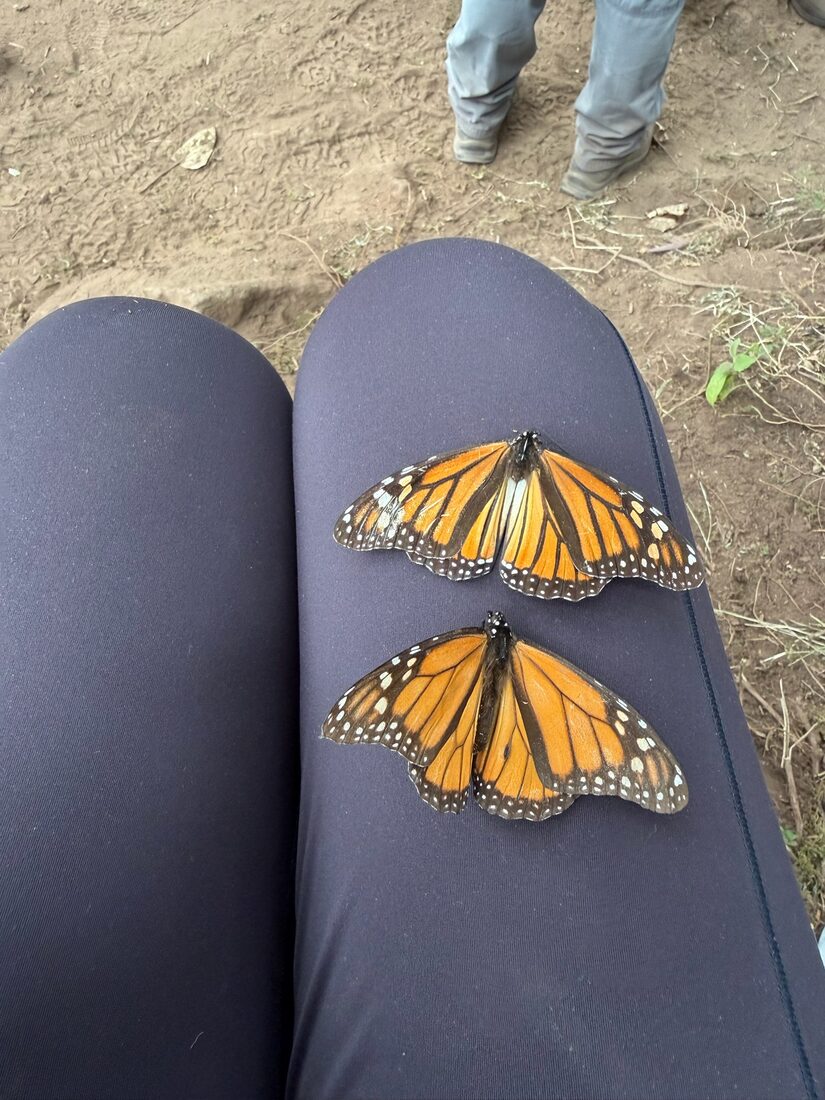
When I finally stood at the top of that mountain, in the cold, surrounded by monarchs lifting off the fir trees and swirling around my head, I asked myself a question I have been turning over ever since: Why am I being shown this? What am I supposed to do with it?
I think I finally know the answer. And it starts with a number.
The monarch is one of the great miracles of the natural world. Every year these creatures — each weighing less than a paperclip — travel thousands of miles, from as far north as the Great Lakes and Canada, down through the United States, through my own hometown of Austin, Texas, all the way to a handful of mountainsides in central Mexico. No single butterfly makes the whole round trip; it takes multiple generations. And yet, somehow, they return to the same few forests every winter, to trees their great-great-grandparents never saw. They have been doing this since long before any of us were here to watch.
And here is the number that stops me. When you measure the forest the entire eastern migration compresses into each winter, it comes to just a few hectares. This past winter the monarchs occupied about 2.9 hectares of trees — the equivalent of a few city blocks holding tens of millions of butterflies. Scientists say the population needs at least six hectares to be considered safe. We are at less than half of that.
I climbed all that way, nearly couldn’t breathe, crossed the whole cold valley — and the reward, the miracle, was packed onto a patch of mountainside smaller than a neighborhood. The most precious things in this world really are hidden away, revealed only to those willing to go up after them. But “hidden away” also means fragile. It means the entire eastern monarch migration is balanced on a few acres of fir trees in Mexico, and a thinning ribbon of habitat stretching north through all of our backyards.
Let me tell you what is threatening it, because every piece of it landed differently for me after I had been up there.
The trees the monarchs cluster on are oyamel firs — and they are being lost to logging. I need you to understand what that meant to me personally: when I couldn’t breathe near the top of that mountain, the branch my guide Daniel broke off and rubbed in sap and held to my lungs came from one of those trees. The fir that sheltered the butterflies is the same fir that saved my life. And those forests are being cut down, taking the winter cover and the delicate microclimate that protects the butterflies from cold they otherwise could not survive.
Farther north, the monarch caterpillar can eat only one thing: milkweed. And milkweed has been disappearing across America’s farmland for decades, much of it cleared by herbicide-resistant agriculture. No milkweed, no caterpillars, no next generation.
And underneath all of it is climate change — the work closest to my own. Monarchs read temperature to know when to breed, when to migrate, when to wake. Erratic weather throws those signals off, shifts when the milkweed emerges and when the flowers bloom, and rising carbon dioxide may even be making the milkweed itself too toxic for the caterpillars to eat. In 2022 the migratory monarch was added to the international Red List as endangered. In the United States, federal wildlife officials have proposed listing it as threatened — a decision still working its way through the system.
But I do not want to leave you in the cold of that. Because here is the other number, and it is the reason this chapter exists.
This past winter, the monarch population was up sixty-four percent over the year before. Not because of one heroic act, but because the conditions were a little kinder and because a great many people — across three countries — have been planting, protecting, and refusing to give up. It is still far below where it needs to be. But it moved. The sun came out, a little, and the butterflies flew.
That is the whole lesson of this book, written in a living creature. You do not get to choose the hour the sun comes out. You only get to choose whether you are still up there doing the work when it does. The monarchs are sitting in their own frustrating hour right now — still below the safe line, still waiting. And they are not asking us for something heroic. They are asking for milkweed, for forest, for a steadier climate. They are asking us not to climb down twenty minutes early.
So — what is your part to play, now that you have come down the mountain?
Here is mine, and a few things within reach for almost anyone. Plant milkweed native to your region — it is the single most direct thing most of us can do, and the monarch flies through nearly all of our backyards on its way; a few square feet becomes a fuel stop on a thousand-mile journey. Protect the forests and the people guarding them — the overwintering forests are held together by local communities and guides like Daniel and Arturo, whose livelihoods depend on keeping those trees standing, and supporting reputable reserve-conservation groups protects both the butterflies and the families who steward them. Treat climate as the long climb it is — the reason I spend my career helping renewable-energy and sustainability projects get built and financed is the same reason I climbed that mountain: the most important summits are the ones most people consider impossible, and they don’t get reached by anyone sitting in the warm van at the bottom. And tell the story — most people will never climb that mountain, but you can carry it down for them, the way I am trying to carry it down for you.
I went up that mountain to see a miracle, and I did. What I didn’t expect was to come home with a job. Not a task on a list — a part to play. The monarchs showed me, in the most beautiful way I can imagine, that the precious things are fragile, that the work is never finished, and that the sun does come out for those who stay.
That is the climb. That is the butterfly. And now it is your turn to decide what you will plant.
Epilogue — For the Reader Standing at the Trailhead
If you are at the bottom of your own mountain right now — staring up at something that frightens you, in an industry full of markers for the ones who didn’t make it — I am not going to tell you it’s safe. It isn’t. I’m going to tell you the truth I learned at ten thousand feet with a butterfly mountain trying to take my breath: you can do hard, frightening, miraculous things. You just shouldn’t do them alone. Find the guide who has climbed your mountain before. Do your due diligence on who you rope yourself to. And then get out of the van and walk, because there are things up there they can only show you on foot.
The butterflies are real. The summit is real. And so is the way home.
Sources
Research sources for the mountaineering and butterfly facts: Marvel Treks — Everest death causes; Outside Online — Why climbers die on Everest; Namas Adventure — The Death Zone above 8,000m; ScienceDirect — Personality and lifetime climbing success among Everest mountaineers; Frontiers in Psychology — Self-transcendence in mountaineering; Advnture — Who are the Everest Sherpas; Outside Online — The highs and lows of an Everest Sherpa porter; Advnture — What is summit fever. Monarch facts (Chapter 14): Monarch Conservation — 2025–2026 population numbers; WWF — Monarch population increases 64%; Xerces Society — Eastern monarch numbers increase but remain below historic levels; WWF — Monarch butterflies and climate change; Xerces Society — Monarchs in decline.
Climbing something hard?
You don’t have to climb it alone.
For thirty years I’ve been the guide who goes up ahead — fixing the rope, reading the weather, and holding the line on the way back down. If you’re in the thin air right now, building something that matters, let’s talk.
Where does your company actually stand?
Benchmark yourself against the nine constraints that decide whether a first commercial project gets financed and built. A free 27-question self-assessment — about fifteen minutes.
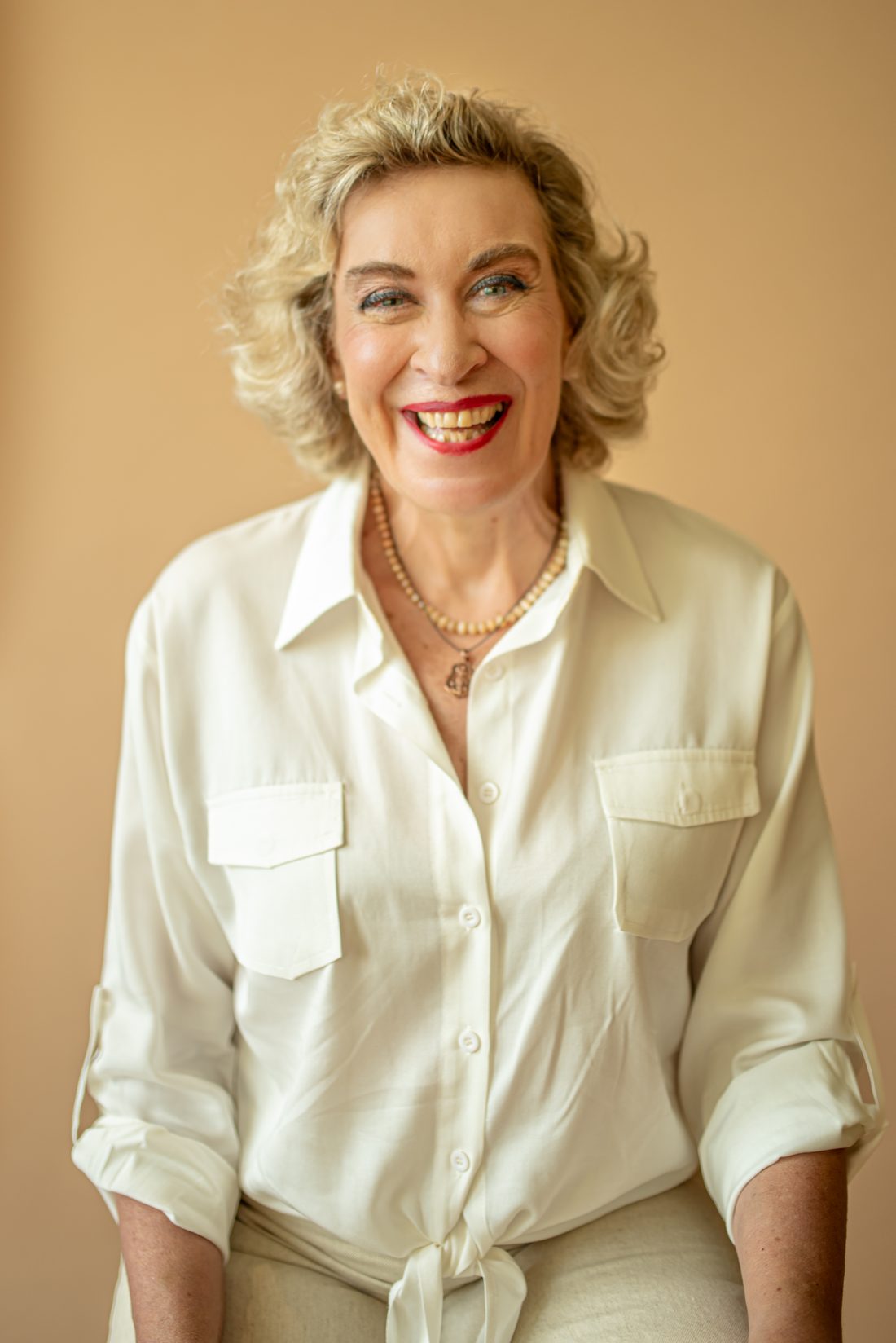
Founder and CEO of QuantaVision, a firm that since 1994 has helped innovators in renewable fuels, renewable chemicals, biobased products, and value-added agriculture finance and build their projects. She guides developers through the full path from concept to financial close, and writes and speaks regularly on financing the bioeconomy. Connect on LinkedIn or at quantavision.earth.